
Scott L. Nooner
Department Chair
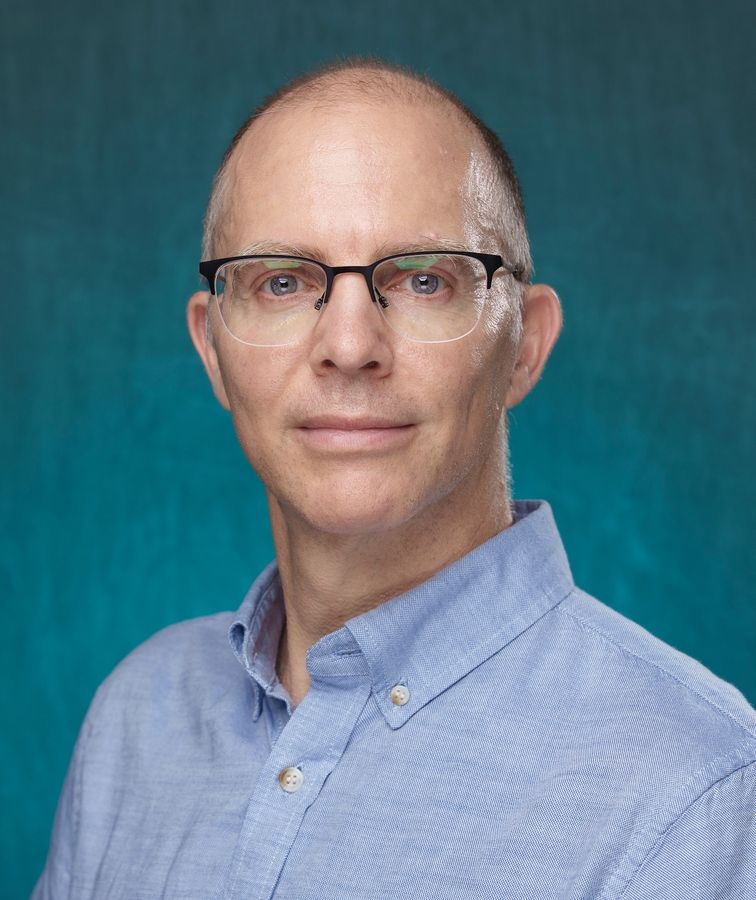
Dr. Scott Nooner is a Professor of Geophysics and Chair of the Department of Earth and Ocean Sciences at the University of North Carolina Wilmington. As a committed educator, he teaches a wide range of courses, including Natural Hazards, Oceanography, and cross-listed geophysics classes. He also developed the department’s MATLAB programming course to provide students with essential hands-on computational training for geoscience applications. Dr. Nooner’s academic foundation began with a unique B.A. in Physics and Fine Arts from Hendrix College, graduating Magna Cum Laude with Honors. This background instilled a deep, lifelong appreciation for the liberal arts, interdisciplinary education, and creativity in scientific inquiry.
His primary research focuses on marine geophysics and geodesy, utilizing precise seafloor and satellite measurements to study active crustal deformation, submarine volcanism, and associated natural hazards. Throughout his career, Dr. Nooner has placed a high value on experiential learning, directly involving both undergraduate and graduate students in all aspects of his scholarship, including high-impact international sea-going expeditions to study active seafloor volcanoes like Axial Seamount. He bridges the gap between creative problem-solving and rigorous quantitative science, mentoring the next generation of scientists through collaborative field research and published scholarship. His work has earned significant recognition, including being named a Palisades Geophysical Institute Junior Research Professor at Columbia University and receiving a top-cited paper award in Geochemistry, Geophysics, Geosystems.
Education
Ph.D., Earth Sciences, Scripps Institution of Oceanography, University of California San Diego
M.S., Physics, Texas A&M University
B.A., Physics & Fine Arts (cum laude, with honors), Hendrix College
Specialization in Teaching
Dr. Scott Nooner’s teaching philosophy spans introductory through advanced courses in Earth and Ocean Sciences, emphasizing active learning, critical thinking, and applied skill development to prepare students for successful careers in industry, research, entrepreneurial pursuits, or graduate school. Drawing intentionally from his own undergraduate experience in the liberal arts, he champions an interdisciplinary approach that values creativity alongside scientific rigor. Dr. Nooner prioritizes hands-on education, seamlessly integrating fieldwork and real-world datasets into his curriculum to help students connect abstract classroom theories with practical, tangible applications. His undergraduate Natural Hazards course and specialized MATLAB programming course for geosciences are prime examples of how he provides direct training in employable scientific inquiry.
Beyond the classroom, his commitment to experiential learning is demonstrated by actively embedding students into true field research. He regularly provides undergraduates with rare opportunities to participate in major sea-going expeditions, where they work with custom instrumentation, submersibles, and remotely operated vehicles to study active submarine volcanoes. This immersive educational environment encourages students to participate in scientific discovery from data collection at sea to computational modeling in the lab. By fostering a supportive, collaborative, and creative classroom culture, Dr. Nooner ensures that UNCW students gain the technical proficiency and confidence required to tackle modern geological challenges.
Research Interests
Dr. Scott Nooner’s scholarship examines the active deformation of Earth’s surface across diverse geological settings. Much of his pioneering work focuses on mid-ocean ridges, subduction zones, and active submarine volcanoes, most notably Axial Seamount on the Juan de Fuca Ridge. By combining innovative ocean-bottom pressure sensors, custom-built seafloor instrumentation, GPS/geodesy, and numerical modeling, his team, which always includes students, monitors subsurface magma movement and forecasts volcanic eruption cycles. This highly collaborative research is well-supported by substantial funding from the National Science Foundation and involves extensive partnerships with federal, academic, and international organizations.
Dr. Nooner strongly believes that student involvement in high-level research and scholarship is a cornerstone of his laboratory. He provides undergraduate and graduate students with unparalleled hands-on opportunities, including joining him on major international sea-going expeditions that employ advanced research vessels, autonomous underwater vehicles, and deep-sea submersibles. Dr. Nooner’s students do not just observe; they lead directed individual studies, complete undergraduate honors and master's theses, and frequently co-author peer-reviewed publications in elite journals like the Journal of Geophysical Research and Geophysical Research Letters. His projects successfully link real-time seafloor observations to hazard assessments and lithospheric processes, engaging students in becoming global scientific collaborators.
Professional Service
Dr. Scott Nooner has a distinguished record of professional and administrative service at UNCW, reflecting his deep commitment to shared governance and institutional excellence. He has served as a Faculty Senator and has taken on numerous key leadership roles across campus. As the former Undergraduate Coordinator for Earth and Ocean Sciences, he managed degree tracks for approximately 100 majors and spearheaded vital curricular transformations. His leadership extended to serving as Chair of the College of Arts and Sciences Curriculum Committee, and as a Faculty Fellow in the College of Humanities and Social Sciences Dean’s Office, where he championed interdisciplinary initiatives, including linking humanities with entrepreneurship.
Crucially, Dr. Nooner chaired the university-wide Reappointment, Tenure, and Promotion Committee, guiding essential faculty evaluations and facilitating communications with the Provost. He has also been deeply involved in steering critical faculty hires and building institutional infrastructure, notably serving as the Director of the Office of Postdoctoral Support, where he established UNCW's first comprehensive policies and handbooks for postdoctoral scholars. Nationally, Dr. Nooner is a dedicated member of the American Geophysical Union, frequently serving as a session co-chair and peer reviewer for major scientific journals. He prioritizes student scholarship by regularly securing funding to bring UNCW students to annual national meetings, enabling them to present their research and build critical professional networks.
Community Engagement
Dr. Scott Nooner frequently applies his specialized geophysical expertise to impactful community partnerships, demonstrating how scientific inquiry can directly serve public history, cultural heritage preservation, and local justice. Utilizing advanced Ground Penetrating Radar (GPR) technology, he leads interdisciplinary field surveys that bridge the gap between geophysics, archaeology, and historical preservation. A major focus of this work centers on recovering African American history in the Cape Fear region. Dr. Nooner has directed vital GPR surveys to locate unmarked graves at historic local landmarks, including Wilmington's Maides Cemetery, Dark Branch Cemetery in Winnabow, and Pine Forest Cemetery, where he helped identify burial sites associated with the tragic Wilmington Massacre of 1898.
Reflecting his commitment to hands-on experiential education, Dr. Nooner actively involves UNCW students in these local field deployments, providing them with invaluable opportunities to use high-tech equipment for meaningful community-based scholarship. His collaborative projects extend to working with the Brunswick Riverwalk Park to identify the architectural foundations of slave quarters for archaeological reconstruction, and scanning Fort Fisher State Park for unexploded historical ordinances. Furthermore, Dr. Nooner has applied his skills to assist local law enforcement, conducting critical geophysical surveys to aid in long-unsolved homicide investigations. Through these creative community-facing efforts, as well as educational outreach demonstrations for local schools and lifelong learning institutes, he provides students with real-world applications of geoscience while making enduring contributions to regional history.
Honors & Awards
Best Paper in Geophysics for A new sea-floor gravimeter
Palisades Geophysical Institute Junior Research Professor, Lamont-Doherty Earth Observatory, Columbia University
CALIT Fellowship, Scripps Institution of Oceanography
Folsom Fellowship, Scripps Institution of Oceanography
Dean’s Graduate Scholar Fellowship, Texas A&M University
Dean’s Scholarship & Arkansas Academic Challenge Scholarship, Hendrix College