
Erin M Meyer
Lecturer
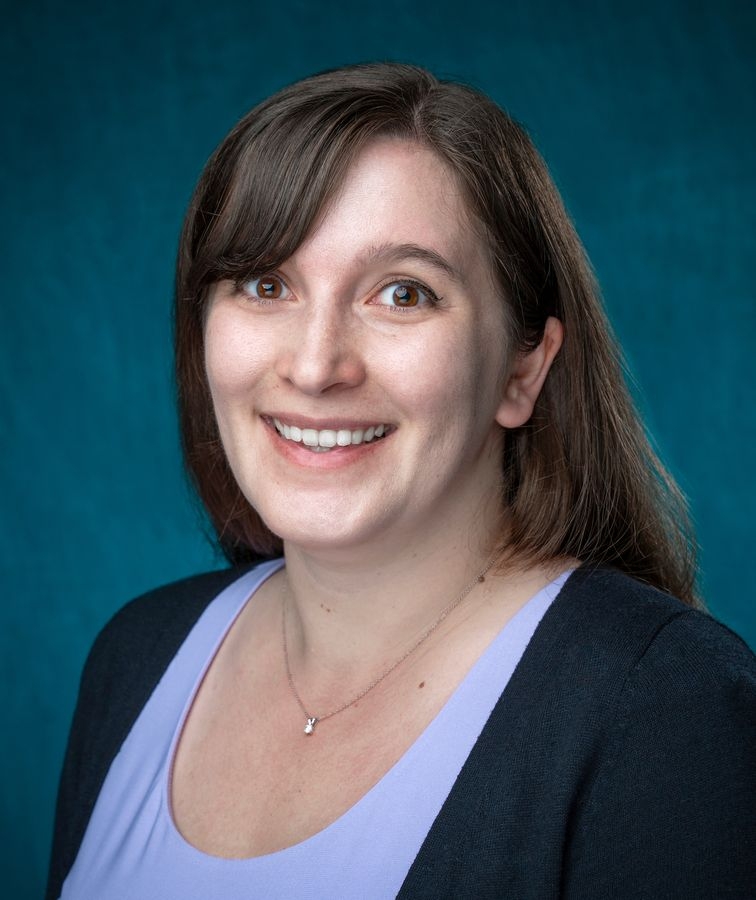
Erin Meyer, Ph.D., joined UNCW's Department of Biology and Marine Biology in August 2024. Dr. Meyer has a history with UNCW, getting both her B.S. and Ph.D. degrees from UNCW in honors marine biology and integrative, comparative, and marine biology, respectively. During her time as a graduate student at UNCW, Dr. Meyer conducted research on calcifying marine microalgae called coccolithophores, and used various microscopy techniques (such as light microscopy, SEM, and TEM) to study their calcification process. As a postdoctoral scholar at Northwestern University, she collaborated with researchers in the materials science and engineering department to study calcification in early developmental stages of sea urchins. Additionally, during this time she worked with researchers at the Bermuda Institute for Ocean Sciences (BIOS) and Bigelow Laboratory for Ocean Sciences (BLOS), to study mineralization in a severely understudied marine protist, called Acantharia. During this time, Dr. Meyer performed single-cell RNA extractions to identify potential transporters that would allow Acantharia to sequester enough strontium to make an entire endoskeleton of strontium sulfate. Currently at UNCW, Dr. Meyer is interested in further culturing and studying mineralization in coccolithophores and Acantharia.
Education
Postdoctoral Scholar, Materials Science and Engineering, Northwestern University
Ph.D. in Integrative, Comparative, and Marine Biology, University of North Carolina Wilmington
B.S. in Marine Biology, University of North Carolina Wilmington
Specialization in Teaching
Concepts of Modern Biology (BIO105)
Principles of Biology: Cells (BIO 201)
Calcification and Climate Change (BIO 495)
Role of Biominerals in Advancing Tech and Health Care (BIO 495)
Research Interests
Dr. Meyer is interested in marine biomineralization, particularly intracellular biomineralization (or, mineral production that occurs inside a cell). Main areas of study include trying to understand the role a cell plays in instigating and controlling inorganic mineral growth, from ion sequestration using transporters to the use of specific organelles or polysaccharides to shape the growing mineral. Her work primarily focuses on single-cell systems, namely in coccolithophores and Acantharia. Dr. Meyer's work requires culturing these cells, which is challenging for Acantharia as there are no current culturing methods for these species. Work with Acantharia therefore requires plankton collection (using nets or Niskin bottles) and live single-cell isolation. Additionally, her work requires the use of microscopy, and Dr. Meyer uses various methods such as fluorescent and confocal microscopy, as well as scanning and transmission electron microscopy to identify, to investigate and identify the cell structures used in mineralization.
Community Engagement
Richard M. Dillaman Bioimaging Facility volunteer
Science Olympiad Microbe Mission Judge