
Hosam Alamleh
Assistant Professor
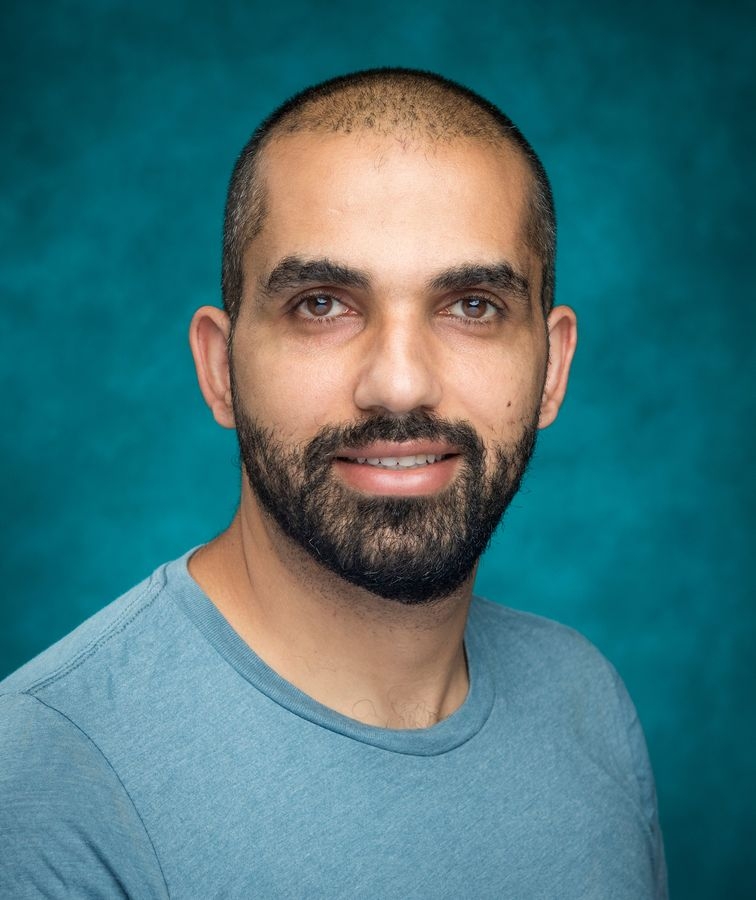
Dr. Alamleh is a cybersecurity expert whose research spans unmanned vehicle security, attack surface analysis, mobile and wireless security, secure programming, intrusion detection, industrial cybersecurity, and IoT security architecture. His work explores the security challenges of emerging and mission-critical systems, with particular attention to vulnerabilities, adversarial behavior, and resilient system design across autonomous, mobile, and connected environments. Through this research, he contributes to advancing cybersecurity solutions for complex real-world applications.
He is also a Co-PI in the MCARTEC: Maritime Cybersecurity Applied Research, Technology & Education Center, where he supports research and innovation aimed at advancing maritime cybersecurity. In addition to his academic work, he is engaged in consulting roles that apply research-based cybersecurity expertise to practical challenges across transportation, critical infrastructure, and connected technologies.
His current and previous research spans a wide range of high-impact topics, including maritime cyber-forensics, attack mapping, and incident reporting for critical infrastructure; mobile payment security and tokenization risks on rooted Android devices; and intrusion detection systems for cargo truck CANBUS networks using machine learning to identify masquerading attacks. Additional projects include driver identification through vehicle behavior analysis, data exfiltration using mobile tracker ecosystems such as AirTags and Galaxy Tags, and binary deanonymization for malware attribution through analysis of coding style in executable binaries.
Through this work, Dr. Alamleh combines academic depth with practical innovation, advancing cybersecurity across autonomous systems, transportation, mobile platforms, and critical infrastructure.
Education
Ph.D. in Engineering, Louisiana Tech University. He also holds several cybersecurity certifications, including CISSP and CEH.
Specialization in Teaching
System security
Secure programming
Artificial intelligence for cybersecurity
Industrial cybersecurity
Research Interests
Dr. Alamleh research interests center on cybersecurity for connected, mobile, and cyber-physical systems, with particular emphasis on attack surface analysis, authentication, localization, wireless security, and IoT security. He is especially interested in understanding how vulnerabilities emerge across complex systems and how resilient architectures can be designed to reduce risk in real-world operational environments. These interests are reflected in his scholarly profile and broader work in cybersecurity, wireless systems, and IoT security.
A major focus of his research is the security of autonomous and transportation systems, including unmanned aerial and maritime vehicles, cargo truck CANBUS networks, and other mission-critical platforms. His work examines adversarial behavior, intrusion detection, system vulnerabilities, and defensive strategies for environments where cyber compromise can have direct physical consequences. He is also interested in maritime cybersecurity, cyber-forensics, and critical infrastructure protection, particularly as these areas intersect with transportation and industrial systems.
In addition, his research explores mobile security, secure programming, and mobile payment security, including the analysis of tokenization and payment mechanisms on Android platforms. Other interests include BLE tracker security, data exfiltration through mobile tracking ecosystems, malware attribution through binary deanonymization, and the use of machine learning to identify attacks and anomalous behavior. Broadly, his work aims to bridge theory and practice by developing actionable methods to detect, analyze, and mitigate threats across mobile, wireless, autonomous, and IoT-enabled systems.
Professional Service
Dr. Alamleh professional service reflects sustained contributions to the cybersecurity community through editorial leadership, international technical collaboration, and applied consulting. He serves as an Associate Editor for IEEE Transactions on Dependable and Secure Computing, supporting the peer-review process and helping maintain high standards for scholarship in cybersecurity, systems security, and dependable computing.
He also serves as an Expert Board Member with NATO since May 2025, contributing to the scientific and technical coordination of the Ai4CUAV – Innovative AI-framework to enable the Detection, Classification, and Tracking of Killer-Drones project under the NATO Science for Peace and Security Program. In this role, he provides expertise in unmanned vehicle security, cyber-threat analysis, and the protection of autonomous systems, helping guide research and collaboration in an area of growing international importance.
In addition to these roles, he has undertaken several consulting engagements in cybersecurity, applying research expertise to practical challenges in areas such as vehicle security, smartphone security, wireless systems, and related emerging technologies. His consulting work bridges academic research and real-world implementation, supporting organizations in identifying vulnerabilities, assessing attack surfaces, and developing more secure system designs.