

Kaylee Luchansky
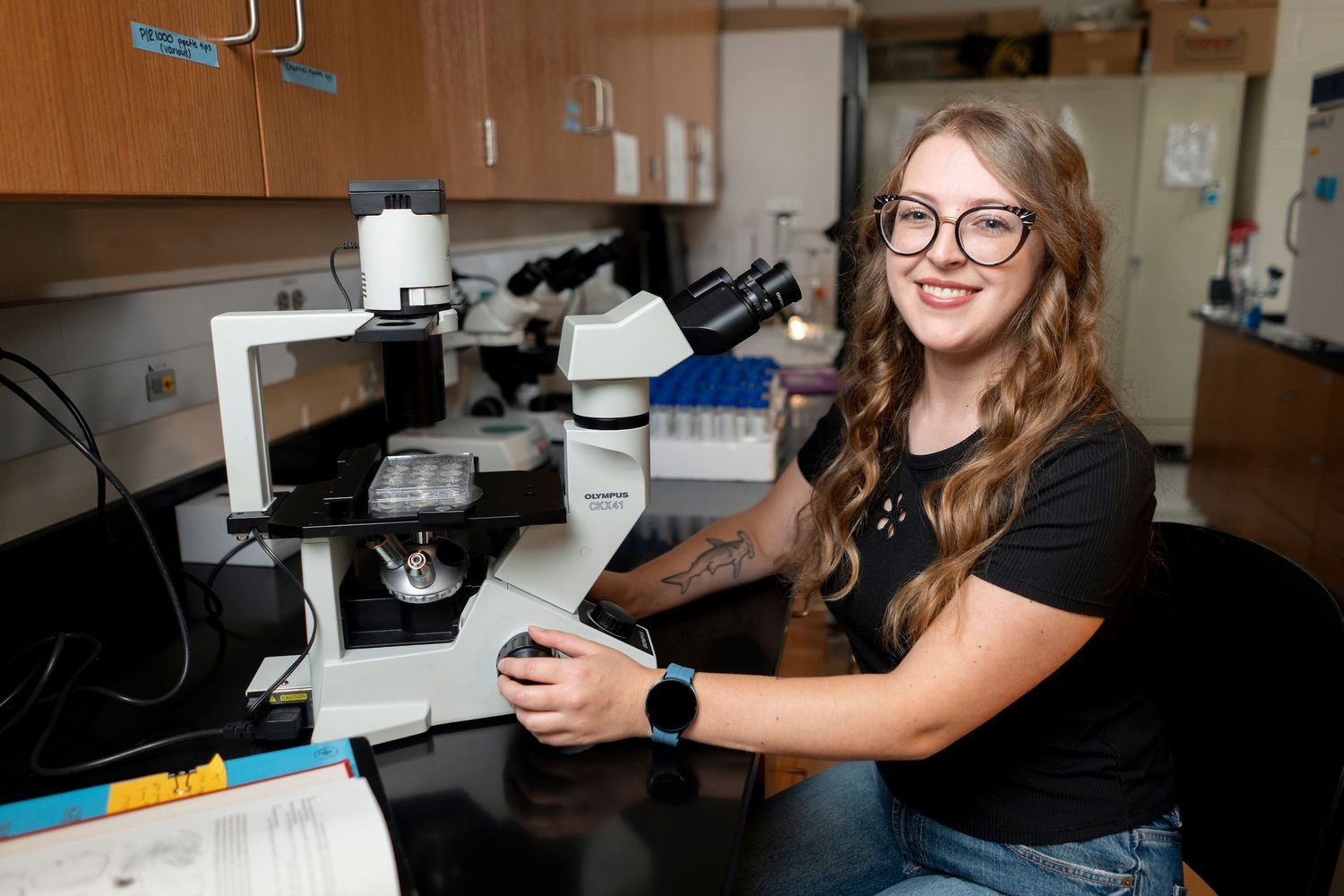
Photo: Jeff Janowski/UNCW
Kaylee Luchansky spent her summer examining the use of native zooplankton to repair the ecosystem of one of North Carolina’s most popular lakes. Jordan Lake, located south of Durham, is plagued by harmful algal blooms that threaten water quality.
By identifying and cultivating native zooplankton species capable of controlling algal populations, then releasing them into a section of Jordan Lake, Luchansky hopes to prove that these tiny organisms can restore the lake’s ecosystem. If successful, the approach could offer a method to restore other eutrophic waters across the state.
Zooplankton species commonly found in Jordan Lake have a better chance of consuming the cyanobacteria and tolerating the toxins produced by the algae, said Luchansky, a doctoral student in the Integrative, Comparative and Marine Biology program at UNCW.
“Using zooplankton to graze on the algae is akin to using controlled burns to reduce undergrowth in a pine forest,” she explained. “While this manipulates the ecosystem, it is a manipulation designed to help it. Moreover, zooplankton is a critical food resource for young fish, so the zooplankton we cultivate cannot overpopulate, as they will be consumed by the fish.”
This research is shifting the focus from controlling nutrients and oxygen in the water to repairing the ecosystem cycle to utilize those nutrients for increased productivity, said Luchansky.
“If more algae lead to a larger population of zooplankton, then it should also result in more fish, larger fish and improved sport fishing opportunities,” she added. “My findings could reduce fish stocking costs by increasing the survival rate of juvenile fish. This study may also highlight the importance of considering zooplankton in water resource management when dealing with persistent algal bloom issues.”
The most rewarding part of her work has been the opportunity to be a part of a team addressing clean water challenges, she said.
“My undergraduate research was also in water quality, but my graduate research has shaped my career goals differently,” she said. “I thought about lake management and policy while working in Lake Erie, but I never thought about it as thoroughly as I am now. I did not experience isolating, culturing and identifying algae before, but this project has allowed me to gain those skills.”
Luchansky’s research is supported by the NC Water Resources Research Institute, NC Sea Grant and the Stormwater Consortium.
This article has the following tags: Seahawk Stories