


Zandra Harris Pinnix ’95
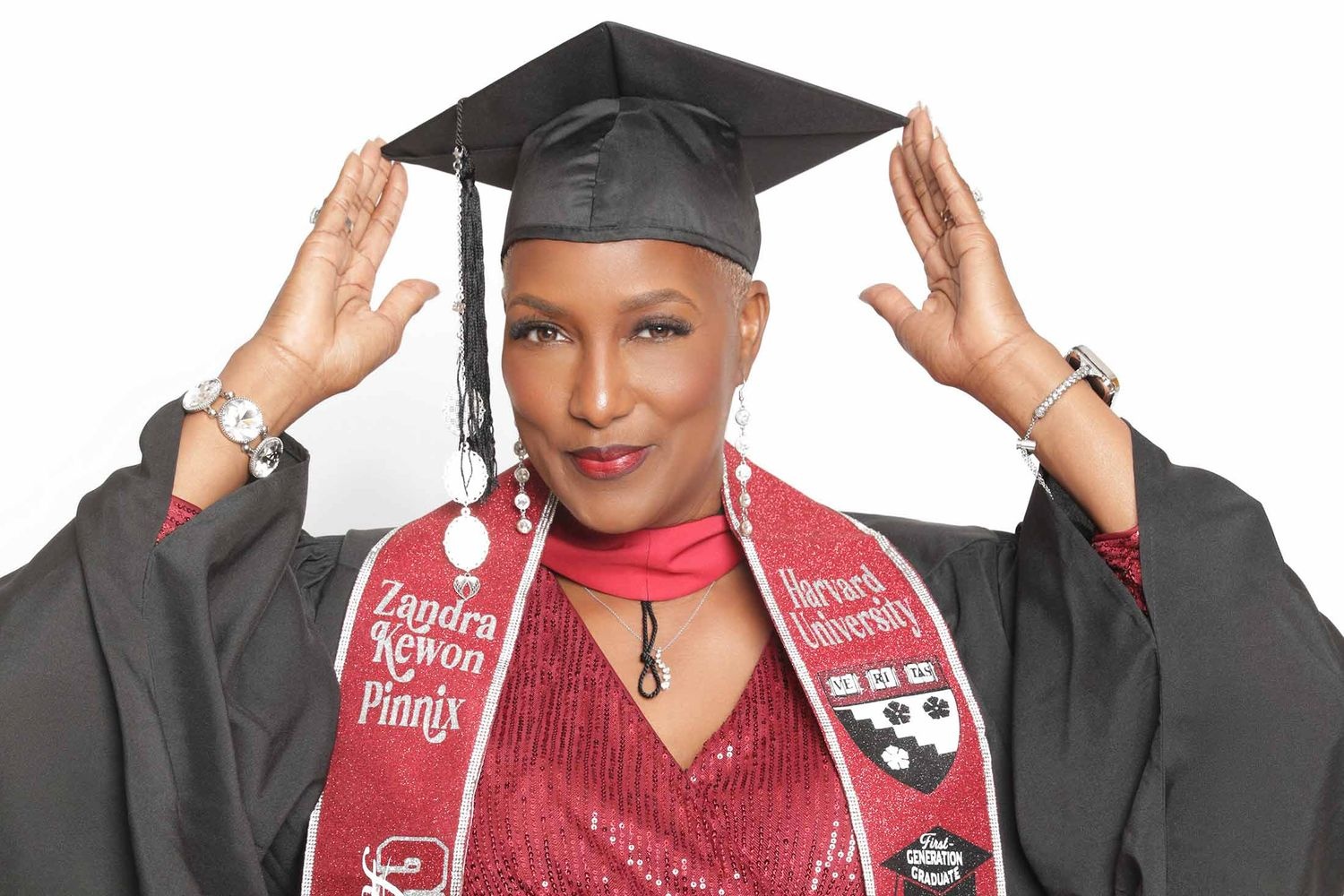
Courtesy: LaTrayl Adams/Perfect Snap Photography
For Zandra Harris Pinnix ’95, education is more than achievement; it’s a responsibility. As an assistant professor and director of the STEM Academic Fellows Program at Guilford College, she uses her passion and experience in science, faith and leadership to build pathways for students from all walks of life.
“My drive to create opportunities for young people is deeply rooted in a fundamental sense of gratitude and necessity,” said Pinnix, who was previously a lecturer in the Department of Biology and Marine Biology until 2024. “I am immensely grateful for the mentors and institutions, including UNCW and my experiences at NC A&T, Wake Forest and Harvard, that opened doors for me. That support was transformative, and my deepest purpose is to pay that forward.”
Pinnix emphasized that building pathways for students is essential; a commitment shaped by her own experiences navigating systemic barriers.
“We simply cannot afford to lose the talent, perspective and brilliance of any student, especially those from underrepresented backgrounds, if we hope to solve the world's most pressing challenges,” she explained. “My life’s purpose, goal and calling are clear: to ensure that every student has access to, and the opportunity to pursue their dreams, transforming their potential into impactful contributions to the world.”
Pinnix’s academic journey began when she received a basketball scholarship to play at UNCW. She credited the opportunity to a “dedicated network of coaches who actively invested in my future, far beyond the court. They demonstrated profound commitment, from buying me my first pair of sneakers (Brenda Hall) to providing encouragement, support, and transportation for me to and from practice and games (Bill Liess and the late Darrell Crews).”
“My middle school coach, the late Mark Mooneyhan, played a crucial role in convincing my mother, the late Reverend Cassandra Carter, that basketball would not interfere with the academic excellence she adamantly stressed I achieve,” she recalled. “Their advocacy, which even extended to intervening when they felt I was being played out of position, ensured I had the support needed to pursue both my athletic and academic goals.”
After earning her bachelor’s degree in biology with a minor in chemistry from UNCW, Pinnix continued her academic journey with a master’s in chemistry from North Carolina A&T, a doctorate in biochemistry and molecular biology from Wake Forest University School of Medicine, an Ed.D. in Christian education from Andersonville Theological Seminary and an Ed.M. in higher education leadership from Harvard University, where she earned a perfect 4.0 GPA. She was also crowned Miss UNC Wilmington in 1995 and was featured in the Campus College Queens edition of Ebony Magazine.
“I am the first person in my family to graduate with a high school diploma, a college degree and a degree from an Ivy League school,” she said. “...I want to reiterate the value of my current experience, both in the classroom as a tenure-track faculty member, a cancer researcher and in program leadership as a director at Guilford College. This combination has given me a boots-on-the-ground understanding of the student experience, the faculty workload and the strategic needs of academic programs, which I believe is essential for effective leadership.”
Two pivotal classroom experiences set Pinnix on her research path. In organic chemistry, her professor and mentor, Ned Martin, recognized her potential and challenged her academically, an experience that solidified her decision to pursue a master’s degree in chemistry. A second turning point came in a biology course, where she was introduced to the concepts of oncogenes, cancer and metastasis.
“It was as if those words lifted off the page,” she recalled. “The more I investigated these terms, the more I was enthralled with the pursuit of cancer research, igniting the passion that would shape my master’s and Ph.D. work, and much of my career.”
"My undergraduate experiences at UNCW ignited my passion for discovery, and the supportive environment, particularly from my coaches, the late Mr. Ralph Parker (director of minority affairs), and professors alike, instilled the confidence I needed to pursue a career that integrates teaching, mentorship, and leadership — not just in the lab, but across various educational systems."
Pinnix’s discovery of the role of ferroportin in breast cancer was the capstone of her graduate scientific career, she said. Her groundbreaking research on ferroportin and breast cancer, published in Science Translational Medicine in 2010, revealed new insights into aggressive forms of the disease. Her most recent published papers in Computational Advances in Bio and Medical Sciences and other peer-reviewed journals focus on utilizing machine learning to identify markers for triple-negative and quadruple-negative breast cancer.
“Personally, it was the validation of years of painstaking work and a powerful demonstration that a student from my background could contribute meaningfully to fundamental science,” she said. “For the scientific community, it provided a new, critical target for diagnostics and therapy, particularly for aggressive forms of breast cancer, opening a new area of research at the intersection of iron metabolism and cancer biology.”
“This work is essential because these highly aggressive subtypes disproportionately and aggressively impact underrepresented populations of women, driving my mission to ensure science directly addresses health disparities,” she added.
At Guilford College, Pinnix combines her scientific expertise and leadership training to empower first-generation and underrepresented students in STEM.
"This mission is deeply personal because I was a first-generation student and in almost every space, the only Black, female. I frequently felt like an anomaly in academic (STEM) spaces. The percentages of low-income, first-generation young people who will matriculate and graduate from a post-secondary school are significantly less than those of other ethnic groups due to challenges that include deficiencies in academic preparation, social interaction, community, financial support, psychological stability and mentorship,” she said. “In addition, there is a severe disparity in retention rates of underrepresented students compared to overall student populations, as these students are disadvantaged in almost every measure of college success. This marginalized group continues to experience problems accessing higher education and persisting to graduation, especially in STEM disciplines.”
Pinnix’s journey revealed a calling to use her knowlesge to open doors for others.
“My purpose is to reach students who feel isolated — who feel like they've been left on an island — and share that I was once there. Through this shared understanding, I can guide them to the fruitful resources they need: in mentorship, financial literacy, a strong sense of belonging and the academic support required to thrive.”
She also co-founded Appian Hive with a fellow Harvard classmate, a digital marketplace that connects higher education professionals to share resources, mentor others and engage in quality-driven content creation, she said.
“This initiative allows me to combine my passion for equity, my background in academic leadership and desire to scale innovative solutions across the entire sector,” Pinnix said. “I am also prioritizing launching a comprehensive education consulting program. This initiative would provide support services and mentorship to significantly boost retention and graduation rates for underrepresented first-generation students.”
When Pinnix looks back on her journey from her hometown to UNCW to Harvard, the through-line connecting every accomplishment “is a commitment to purposeful service by faith,” she said.
“Every step has involved a faith walk that has served as the spiritual and ethical compass for my work,” Pinnix said. “Whether it was on the basketball court representing my hometown of Waycross, Georgia or my university, at the lab bench pursuing a discovery that could help patients, or in a leadership position building programs for student success, the goal has always been to have faith that God would use my abilities and opportunities to serve a cause greater than myself, and that I would leave every place — especially the students that I serve — better than I found it.”
UNCW homepage image courtesy: LaTrayl Adams/Perfect Snap Photography
This article has the following tags: myUNCW Seahawk Stories Biology & Marine Biology CSE Students & Alumni CSE - College of Science & Engineering