

UNCW is Building Community Flood Resilience
Understanding How Water Connects Coastal Communities
Courtesy: Meredith Hovis/UNCW
Coastal communities face the challenges of recurring and increasing flood risks, sea-level rise, and many other hazards. Addressing these concerns invites integration of the science of how water flows, understanding community perceptions, better monitoring, and strategies to manage urban watersheds and coastal systems.
At UNC Wilmington, co-authors of two recent papers, Phil Bresnahan, associate professor in earth and ocean sciences, and Meredith Hovis, assistant professor in environmental sciences, are advancing an interdisciplinary framework for coastal resilience. The team on both papers includes experts from across UNCW: Troy Frensley, Joanne Halls, Lynn Leonard, Erin Moran, Chris O’Connor, and Dave Wells; community partners, Kimberly Lebby formerly with DREAMS Center for Arts Education, Craig Harris with the City of Wilmington, Mariko Polk with NC Sea Grant, Jennifer Dorton and Cotie Alsbrooks with Southeast Coastal Ocean Observing Regional Association; along with UNCW graduate students Steven Anderson, Jordan Davidson, Chelsea Kasney, and Bentley Settin.
Together, the multi-institutional team merges physical and social sciences, community workshops, and K-5 education to create informed awareness for residents.
“Wilmington is uniquely vulnerable to coastal storms, heavy rainfall, rising sea levels, and compound flooding events,” said Harris. “By working together, the City brings practical, policy-driven leadership and an emergency management perspective, while UNCW contributes invaluable research, data analysis, and technical knowledge.”
Their work offers a blueprint for managing complex coastal systems through partnerships with science, the government, education, and community members.
Harris emphasized the importance of preparing the community: “This collaboration helps educate our community and make them more prepared for the impact of the next weather event.”
“The continued collaboration between the City of Wilmington and the University of North Carolina Wilmington (UNCW) through community-based workshops is critically important for building a more resilient and informed community in the face of increasing flood risks.”
A key insight of Bresnahan and Hovis’s work is that resilience is more than infrastructure—it requires ongoing, intentional community involvement to be effective.
Building flood resilience is not just about the physical infrastructure or monitoring water levels, Hovis shares, “It’s about listening to communities and understanding their experiences with flooding.”
“By bringing together physical scientists, social scientists, educators and community partners, we can co-develop solutions that are grounded in both data and lived experiences,” Hovis said.
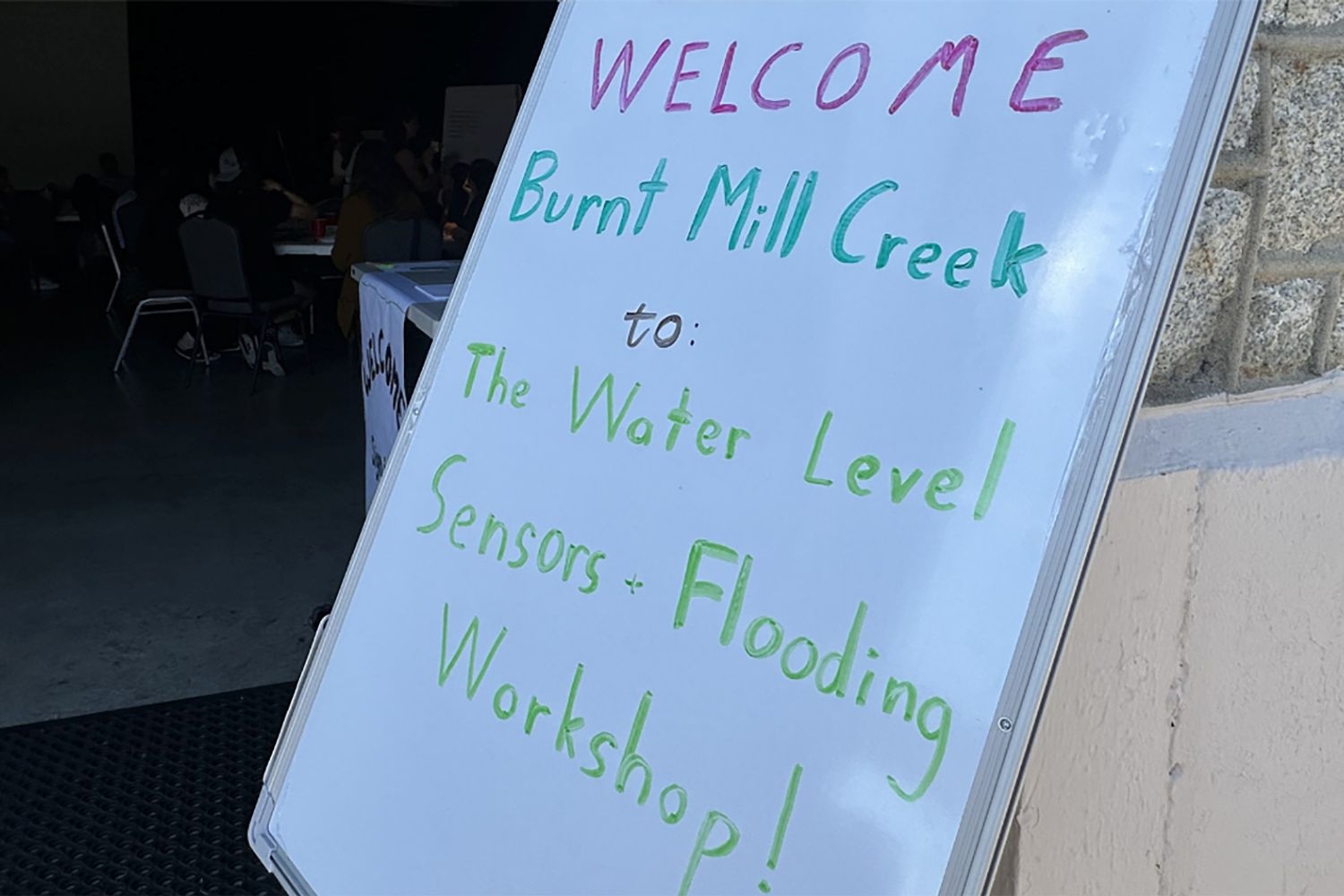
The team hosted community flood safety workshops to gain a greater understanding of public perceptions of flood risks, identify barriers to preparedness, and explore locally relevant strategies for flood resilience. Working toward solutions for complex challenges requires broad collaborations. Bresnahan shares, “Our wonderful partners, both within and beyond UNCW, are energized to improve coastal resilience and coastal literacy through a multi-organizational and interdisciplinary approach.
“We know that much more work is still needed, and we look forward to working with our growing network to address critical needs around flooding and related hazards.”
Because area residents shared their lived experiences, the workshops identified gaps in communication and recovery efforts. Residents expressed a real need for greater communication through social media and text-based alerts for quicker response to flood dangers.
In addition to the workshops, the team addressed flood literacy with a cohort of 4th-grade students at elementary schools. Providing opportunities for students to engage in constructing their own water-level gauges, exploring current sensor data and taking a virtual field trip of the Burnt Mill Creek watershed.
Through these community engagement efforts, residents and students learned about developing an action plan, creating a flood emergency kit and moving quickly to higher ground to stay safe during flooding events.
By adding additional waters sensors to the current real-time network, strengthening community relationships, and expanding education opportunities these efforts are intended to help better equip coastal communities with knowledge and resources for improved flood safety.
The team is working to implement recommendations from community members as it continues to improve its flood alert infrastructure.
Together, UNCW and the community will continue to explore solutions as we meet the growing safety challenges of flood risk and sea-level rise.
Read more about Phil Bresnahan's research.
Read more about research by Meredith Hovis.