
Revisiting the Revolution: Divided Loyalties and the Revolution in North Carolina
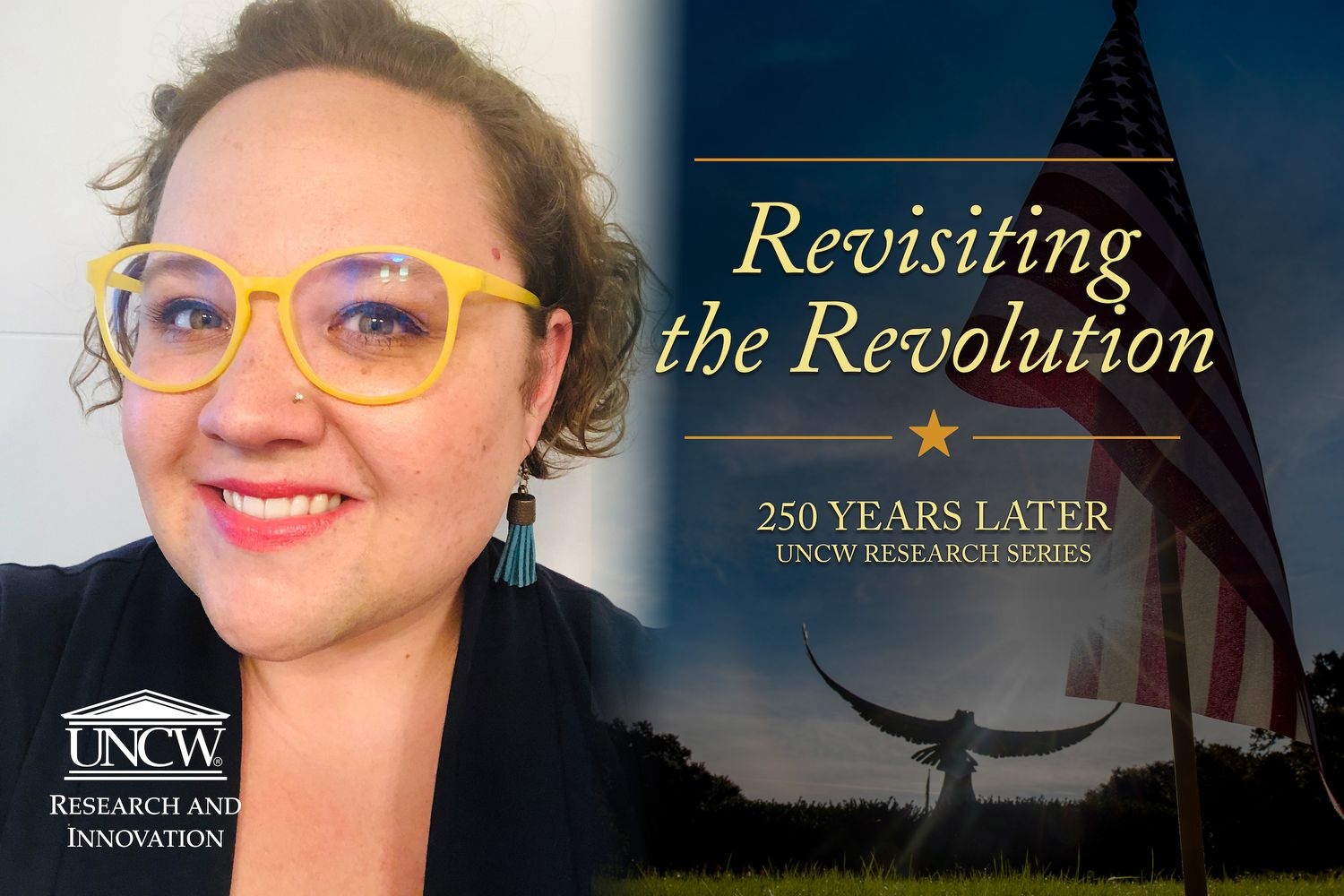
Photo: JaffJanowski/UNCW
This article is part of the Revisiting the Revolution Series. Read More From The Series
Lecturer Kim Sherman, a historian of early American society and culture, studies the social history of the Revolution, examining how ordinary people, families and communities were affected by the upheaval. She delves specifically into North Carolina, which was home to one of the largest Scottish populations in the world outside of Scotland during this time.
Sherman examines how these communities experienced rising tensions and discrimination in the decades leading up to the Revolution and during the war itself when legislation led to the expulsion and displacement of loyalist families. She also studies how households were divided by political allegiances and loyalties. In some cases, she said, political loyalties divided families, with siblings, parents and children finding themselves on opposing sides of the conflict.
"If we look at all the American colonies, there's an estimate that about 20% of colonists were loyalists and remained loyal to the British crown. It is fairly high in some areas of North Carolina because of that Scottish population, but not all Scots were loyalists, which of course complicated things." Sherman notes that even pro-Revolution Scots were often stigmatized.
Regional and cultural factors also shaped how allegiance was perceived. In areas like Wilmington and Edenton, many Scottish merchants were often assumed to be loyalists due to their economic ties to the British Empire, even when they did not explicitly identify that way; Highland Scots, who settled around what is modern-day Fayetteville, were more divided.
Sherman's research suggests that earlier Scottish immigrants who arrived in the 1730s and 1740s were more likely to be pro-Revolution, while those who arrived in the years leading up to the war were more likely to lean towards what felt familiar and safe in many cases.
A personal account Sherman draws on are the writings of Janet Shaw, a Scottish visitor who came through Wilmington and the Lower Cape Fear in 1775. Shaw's account, which shares her perspective as someone with strong ties to the British Empire, describes the social and political tensions unfolding as the Revolution broke out in the region. Sherman said writings like these illustrate the complexity of the situation in parts of the country not typically thought of as hotbeds of revolution.
"It's really stuff you can't make up," she said. "With resistance to the Stamp Act all the way up. North Carolina erupts as a civil war in the American Revolution, especially in the back country. Around Wilmington, there's so much rich history here about the social divisions that were happening alongside of political divisions."
Sherman also examines how women experienced the Revolution. She cites the Edenton Tea Party, a North Carolina event in 1774 that brought together roughly 50 women who signed a petition pledging not to drink tea or consume British goods until grievances against Parliament had been addressed. Sherman said what makes the event especially interesting is looking at the women who signed the document and the solidarity between them, which revealed family ties and broader social networks.
In addition to a political movement and war, Sherman's work shows the Revolution was also something that impacted families, communities and everyday life in North Carolina and throughout the colonies, creating both division and challenges for people from all walks of life.
Those stories can still be explored today at historic sites throughout the region, such as Moores Creek National Battlefield, Brunswick Town and Fort Anderson State Historic Site, and the Burgwin-Wright House and Gardens, where visitors can connect with different perspectives from Revolutionary-era North Carolina.
Sherman is participating in several events this year centered on the 250th anniversary of the nation. She will give a public talk at Old Baldy Lighthouse on Bald Head Island titled "Thomas Peters: Fighting the Other Revolution" on Aug. 18. The presentation focuses on the life of Peters, a Black loyalist who was enslaved in Wilmington during the Revolution before going on to establish Freetown, Sierra Leone. Sherman will also be at the Moores Creek National Battlefield's Annual Candlelight Tour on Nov. 21.