
Revisiting the Revolution: How Americans Have Remembered the Revolution
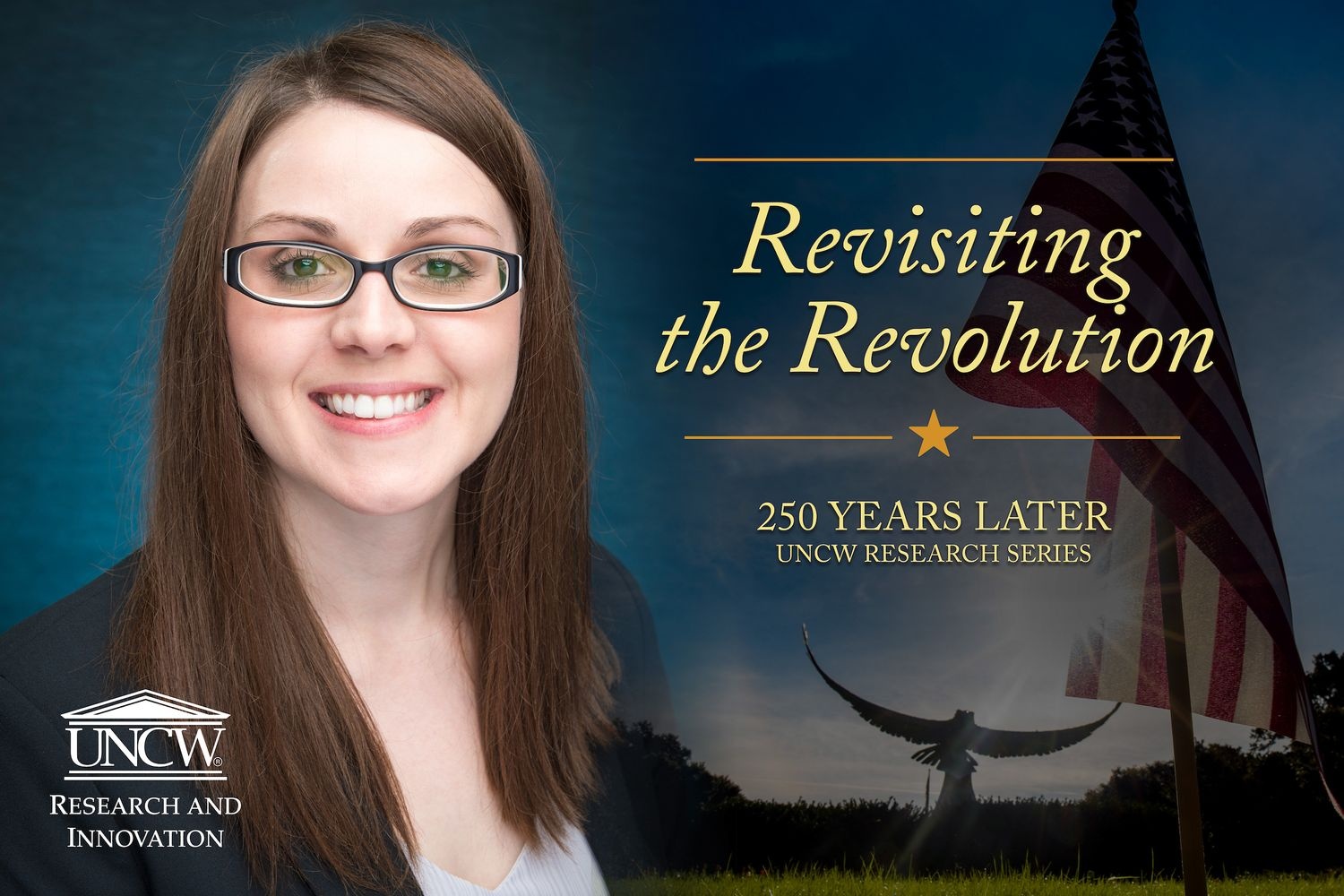
Photo: JeffJanowski/UNCW
This article is part of the Revisiting the Revolution Series. Read More From The Series
Associate Professor Jamie L. Brummitt, who studies American religions and material culture, examines the Revolution's legacy beyond the battles, looking at how generations of Americans have remembered the era through relics, monuments and other religious objects. She examines how those acts of remembrance and objects continue to shape the nation's understanding of its founding.
Brummitt's research shows that for much of the country's history, the ways Americans remembered the Revolution were often tied to the ways they mourned their dead. Most Americans during the Revolutionary period were Protestants, and Brummitt said practices of remembrance and mourning were deeply connected to Protestant traditions.
Brummitt also examines the Revolution through the lens of religion by arguing that the conflict cannot be separated from the religious debates of the time. While Americans today view the Revolution primarily as a political movement, Brummitt notes that separating from Britain also meant separating from the Church of England.
"We don't really acknowledge the religious history of remembering the American Revolution, but during that time and through the century that followed, we really see these celebrations as religious celebrations that remembered or mourned the dead," said Brummitt. "You can't separate the two in the Revolutionary period through the 1800s."
That idea is at the center of Brummitt's current book project, which covers relics of the American Revolution and how Americans have used physical objects to remember the nation's founding. One example is an early collection of Revolutionary artifacts connected to the nation's first president, George Washington. The artifacts were assembled by a Protestant minister and displayed in a church. At the time, many engaged the objects to commune spiritually and physically with George Washington's soul. That collection became part of what is now the Museum of the American Revolution in Philadelphia.
Another example is George Washington's famous home, Mount Vernon, which today is a National Historic Landmark open to the public. Brummitt's first book, Protestant Relics in Early America, shows that many early visitors were drawn there primarily because it was Washington's burial site. Through letters, diaries and newspaper accounts, she found that visitors often wrote about feeling connected to Washington's presence while standing near his tomb.
"Most Americans saw Washington as the Protestant father of the American Republic, and they mourned and remembered him by visiting his grave site," Brummitt said.
Brummitt said those same ideas shaped how Americans created monuments and preserved important Revolutionary sites. Battlefields and memorials were viewed not only as historic places, but as sacred spaces connected to the people who fought and died there. She points to the preservation of places like Bunker Hill, where Americans argued that the land itself was important because it had been "soaked" with the blood of their ancestors. These sites became places where people could honor, mourn and connect with the dead.
Brummitt argues that many of the ways Americans remember and commemorate the Revolution today trace back to the traditions established centuries ago, even if the religious meaning behind them is not always recognized.
"We can look at the current celebrations that are happening right now for America 250," Brummitt said. "We can look at the current administration celebrating heroes of the American Revolution by creating statues. I think that's really interesting because even today, the way we try to celebrate the American Revolution is through material culture. Those practices are not so different from what Americans in the past have done, but the framing is different."
Through her teaching, writing and research, Brummitt encourages students to not only think about the events of the Revolution, but also about how each generation chooses to remember them. For Brummitt, understanding the Revolution means looking at how Americans have continued to build meaning around it for nearly 250 years.
Brummitt will be sharing her research through talks at museums and academic conferences over the coming year. In July, she will present research on the religious history of commemorating the Battle of Bunker Hill at the Society of Historians of the Early American Republic conference in Philadelphia. She will then speak on "George Washington's Relics and Revolutionary War Memory" at the Alice T. Miner Museum in Chazy, New York, in August, followed by "The Relics of George Washington" at the Religion and American Founding Symposium at the University of Vermont in October.
This article has the following tags: Innovation & Discovery Research & Innovation Area Engagement CHSSA Research & Innovation CHSSA - College of Humanities, Social Sciences, & the Arts