


Rethinking Early Childhood Leadership
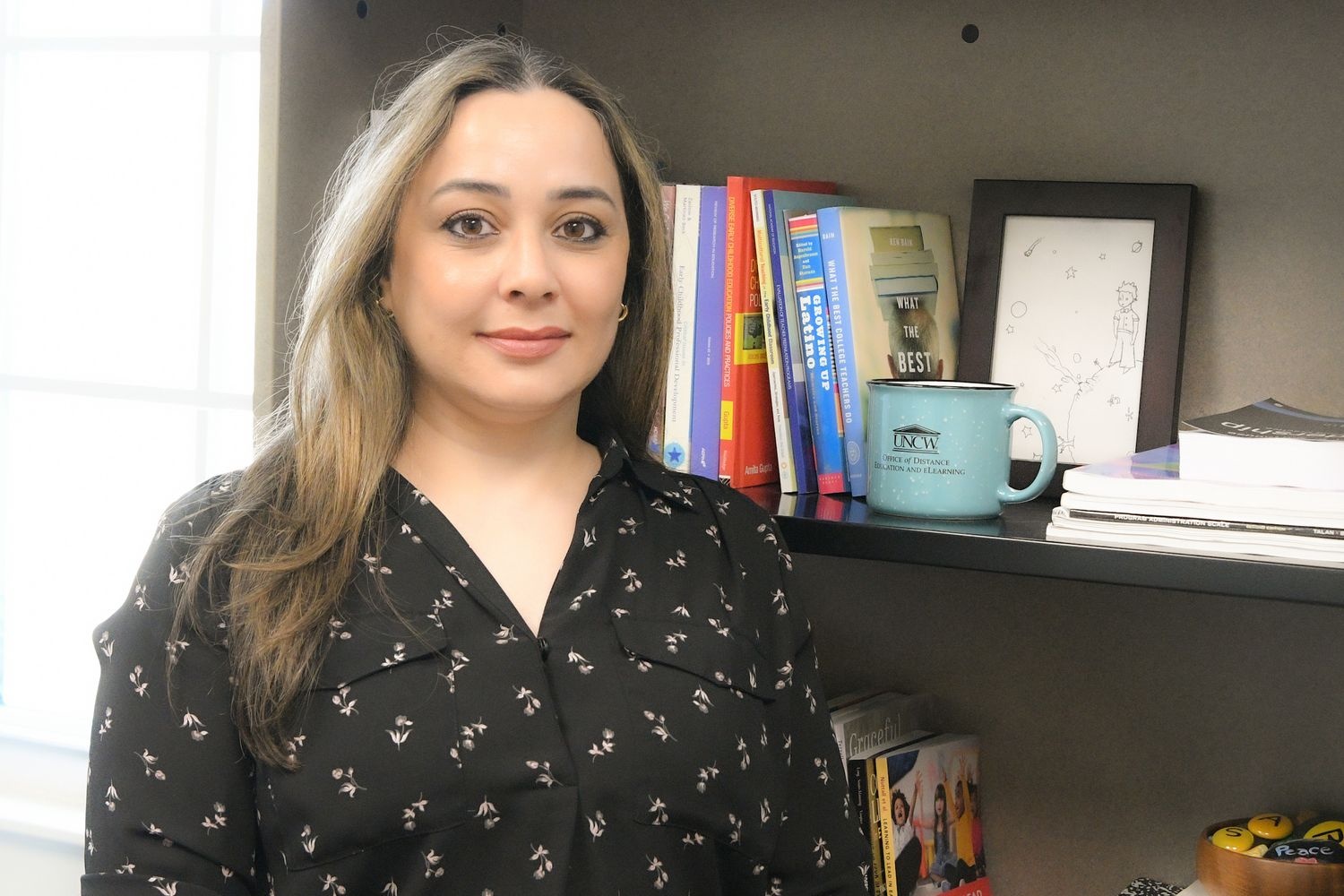
Photo: Krysti Adams/UNCW
Sara Movahedazarhouligh, associate professor and coordinator of the Leadership, Policy and Advocacy for Early Childhood (LPAEC) program at UNCW’s Watson College of Education, studies how early childhood systems support children and families.
Her research draws on ecological systems theory to explore ways early childhood programs, services and leaders can work together more effectively to build stronger, more connected support networks.
“Early childhood education is characterized by disconnected services, siloed programs and isolated practitioners, all trying to support the same children and families but rarely working in coordination,” she said. “The focus of my work is reimagining how these programs and services can interconnect.”
“Traditional leadership approaches in ECE focus on managing individual programs effectively,” she continued. “Ecological leadership asks fundamentally different questions: How does your program connect to and strengthen other parts of the ecosystem?”
Movahedazarhouligh applies mixed methods to her research, combining literature reviews, qualitative case studies and community-engaged participatory research. Her work examines how leadership practices either perpetuate fragmentation or build interconnection.
She also conducts in-depth qualitative studies with early childhood leaders who are successfully building collaborative ecosystems, analyzing their decision-making and leadership practices.
Her work often spans disciplines, including early childhood education, special education, organizational psychology, systems theory and public health. Locally, she consults with organizations including Smart Start, Wilmington Child Development Center and New Hanover Regional Medical Center to explore ecological approaches to strengthening early childhood systems.
A pending grant proposal would support implementation research examining how these approaches could be applied statewide. Internationally, she collaborates with the Early Childhood Development Action Network (ECDAN), the Division for Early Childhood’s International Committee and the Early Childhood Peace Consortium to explore how ecological frameworks can support children in conflict zones, where service systems are often highly fragmented.
At UNCW, Movahedazarhouligh has created an innovative community-engaged scholarship model for LPAEC students.
“My most important collaborators are my students,” she said. “They conduct community-engaged research that advances their learning, contributes to scholarship and helps to improve local early childhood ecosystems.”
Movahedazarhouligh says ECE fragmentation is not inevitable, it's a product of how leadership and funding are structured. And, while the field faces significant challenges — including workforce shortages, inadequate funding and increasing family needs — there’s a growing recognition of system inequities.
“What excites me the most is the paradigm shift potential,” she said. “Leaders trained to optimize individual programs often inadvertently contribute to system fragmentation. But when leaders adopt ecological thinking, they make fundamentally different decisions: sharing resources and building partnerships that can strengthen the entire system.”
She has co-authored four peer-reviewed publications on the topic and is developing an ecological leadership framework outlined in her forthcoming book, Ecological Leadership: Building Sustainable Ecosystems for Early Childhood Education Success, along with a companion workbook.
“Ecological leadership practices can be taught and developed,” she said. “My goal is to provide practical tools — systems mapping exercises, stakeholder analysis frameworks, ecological assessment protocols and partnership-building strategies — that help leaders build stronger, more connected early childhood systems.”
Movahedazarhouligh joined the UNCW faculty in 2020. She holds a bachelor’s degree in occupational therapy and a master’s degree in rehabilitation administration, and worked as an occupational therapist, English teacher, rehabilitation service coordinator, university instructor and research associate before earning a Ph.D. in early intervention and early childhood special education from the University of Northern Colorado.
She said her experiences as an Iranian immigrant and early-career practitioner helped shape her research interests.
“Families often have to navigate multiple systems that don’t communicate with each other,” she said. “I saw how that fragmentation created barriers, especially for children with disabilities. That experience led me to ask how leaders can build more connected systems that better support families.”
While ecological leadership is still emerging in early childhood research, Movahedazarhouligh says the work is already happening at UNCW through the Watson College’s LPAEC program.
“Our redesigned curriculum prepares leaders to be ecosystem builders, not just program managers,” she said. “When we focus on cultivating systems rather than managing programs, we can create conditions where all children and families can thrive.”
About Watson’s Early Childhood Programs
The Watson College offers a Bachelor of Arts in early childhood education and a master’s degree in leadership, policy and advocacy that prepares early childhood professionals for leadership roles across organizations and systems serving children and families.
The LPAEC program also offers an add-on certificate in community college teaching in early childhood for students interested in teaching introductory early childhood courses in North Carolina community colleges.
For more information, visit the program websites:
This article has the following tags: Research & Innovation Research & Innovation Educators Watson College of Education