


CHSSA Connect Launches Student Mentorship Network
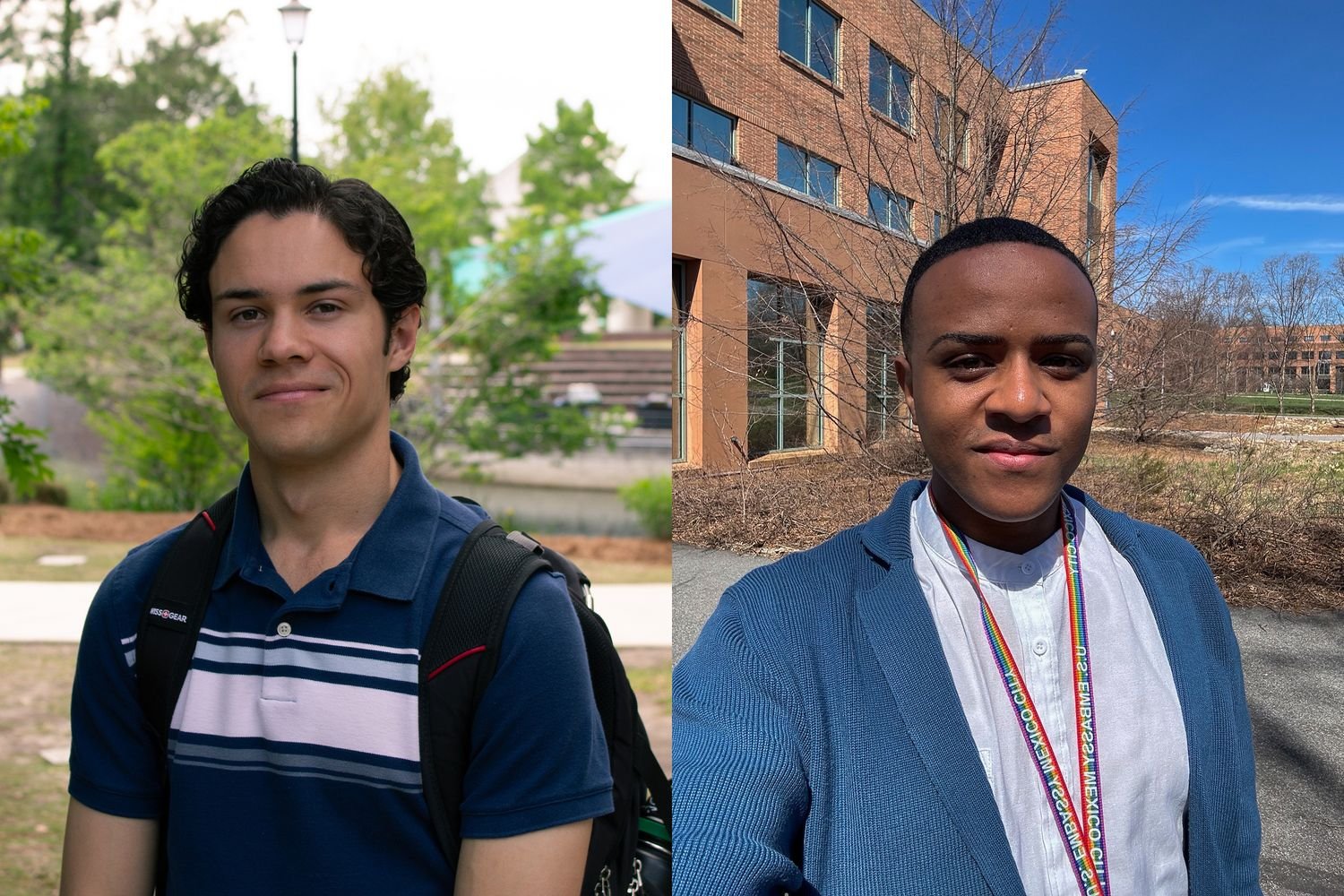
Photo: Rachel Mahoney/UNCW
“So what are you going to do after graduation?”
It can be a tough question amid a competitive job market, and it’s one that mentors in CHSSA Connect help their mentees tackle with more confidence.
Alexander Batten ‘26, an anthropology major planning to graduate in December, was part of the first cohort of students mentees in the College of Humanities, Social Sciences, and the Arts to pilot the program this year. Having learned about it through his professors, he said he signed up hoping to hear some broad advice from a mentor selected for him.
“I still didn’t have a concrete idea of what I wanted to do after graduation,” he said. “It was helpful for me to just gradually build a better and better idea of what I did like and what I didn’t like within anthropology.”
In his case, that mentor was Shah Soligné ’19, a diplomat with the U.S. Department of State. And although his field of work didn’t completely align with Batten’s major, Batten said there was a lot he learned about taking the next step after graduation — whether it be directly into the workforce or into graduate school.
“What was probably the most helpful was the résumé building and talking about graduate school, just to hear from his own experience,” he said. “For me, graduate school has always been kind of a murky thing and Shah helped clear that up.”
Along with the other mentors and mentees, the two held regular discussions about assigned topics and Batten completed reflections following each one. After their sessions, Batten said he’s interested in getting some real-world experience in a position before potentially moving on to grad school, perhaps even in a diverging field. Thus far, he’s been interested in pursuing medical anthropology, reproductive health and global health.
“Something I had no idea about was fellowships and programs like that — I thought that’d be super helpful to get into one of those,” he said. “Anything I could do to give me that competitive edge.”
As a non-traditional student who found his career path through a fellowship opportunity, Soligné talked about the value he found in practical experience along his journey, whether it was through practiced skills or a more flexible outlook. He said that experience can “make you not only a better candidate for graduate school, but a better student.”
“Undergrad really is a time to try a field of things and figure out what it is you like and what speaks to you more,” he said.
There were a few aspects of being “next step ready” that Soligné explored alongside Batten, such as the role of AI in the application process. And it reframed how he thought about his own non-linear path, as well as the self-reflection and overall mindset that helps ensure that next step is a sure and steady one.
Mentorship is a key component of CHSSA Connect, which launched this year among the college’s 16 academic units. Each department is also building a custom curricular component tailored for the unique needs of its students.
Batten said that when faced with the stress and anxiety of what life looks like after the degree, the sessions with his mentor were honest and down-to-earth dialogues that helped put things into perspective and build confidence.
Soligné said he was honored to be considered as a mentor and considered the program timely amid a rapidly changing job market. Having a mentor can help point students get their bearings and make sure they’re “not stressing yourself out about the unknowns.”
“When you have a dynamic where you both are sort of feeding off each other and learning from each other, I think that works very well,” he said.