

Thesis Takes Art History Major to Vatican
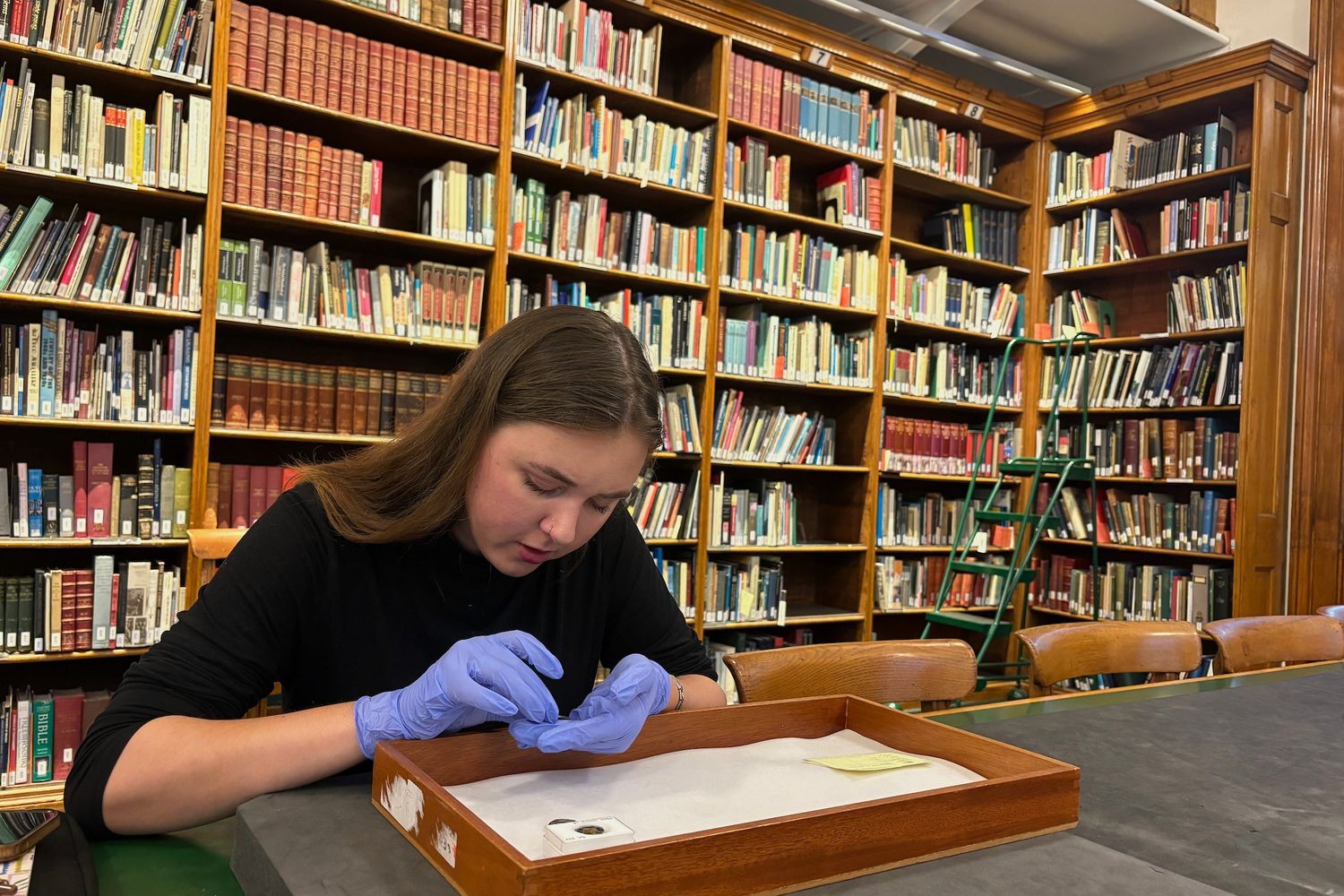
Courtesy: Bryce Settlemier
Researching religious artifacts was an honors thesis project that took Bryce Settlemier ‘26 to four museums at three destinations in the span of just a few months.
She first stumbled across the Roman gold glass medallions, which commonly feature a depiction of Jesus holding some sort of religious tool, while looking online for artifacts to study as part of her First-Year Research Experience.
“That took me off guard at first because not only had I never seen him using a tool, but I’ve also never heard that the Romans may have thought of him as a magician,” she said.
The FYRE project connected Settlemier with faculty mentor Jamie Brummitt, associate professor of religion, helped inspire her to declare a minor in religion on top of her art history major and eventually would take root as an interdisciplinary honors thesis.
She continued consulting with Brummitt and Nick Hudson, professor of art history, trying to narrow down different museums’ interpretations of the medallions’ role in late antiquity and early Roman Christianity. As she continued her studies, she became more interested in museum curation as a potential career path.
In the fall, Settlemier was awarded a CSURF data collection grant to travel to the Metropolitan Museum of Art in New York City, which housed the medallions that first caught her attention. In December, she followed it up with a trip to the British Museum and Ashmolean Museum in the U.K. with the help of a CHSSA student research grant, getting permission to handle some of the artifacts at the British Museum's archives.
Then, the biggest opportunity came about soon after the returned from London: seeing the largest collection of gold glass medallions at the Vatican and exploring the Roman catacombs where they were initially discovered.
“Getting to be in the catacombs…there’s no words for it,” she said.
Each stop on Settlemier’s research journey helped her fit together different pieces of the puzzle for these ancient artifacts — the Ashmolean, for example, is the only one to suggest that drinking vessels initially containing the medallions were ritually broken prior to their placement in the catacombs.
Several theories about the artifacts remain unsettled, she said. But the project has served as a close examination of museum interpretations as trusted sources of information, and how that context can confuse or obscure the true significance of artifacts. And since many of the medallions were taken from the catacombs by thieves or antiquarians, the lack of provenance can muddy the process.
With such an extensive thesis project soon to be under her belt, Settlemier has discovered a love for the research process and is exploring possibilities for graduate school.