
Daidone, Lidster Expand Linguistic Research
Polish Grant Opens Collaborative Opportunity Analyzing Polish-Ukrainian Language Perception
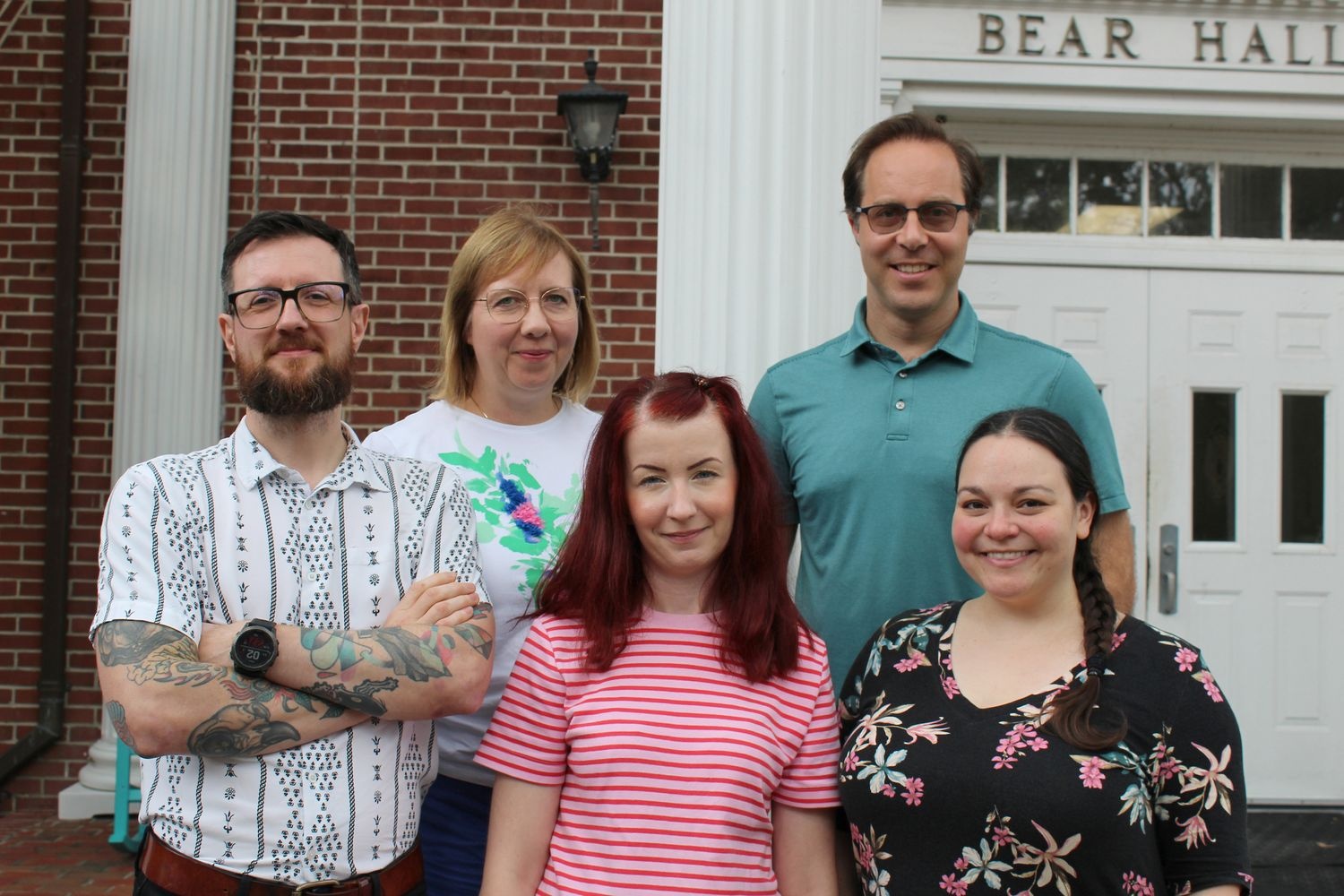
Photo: Rachel Mahoney/UNCW
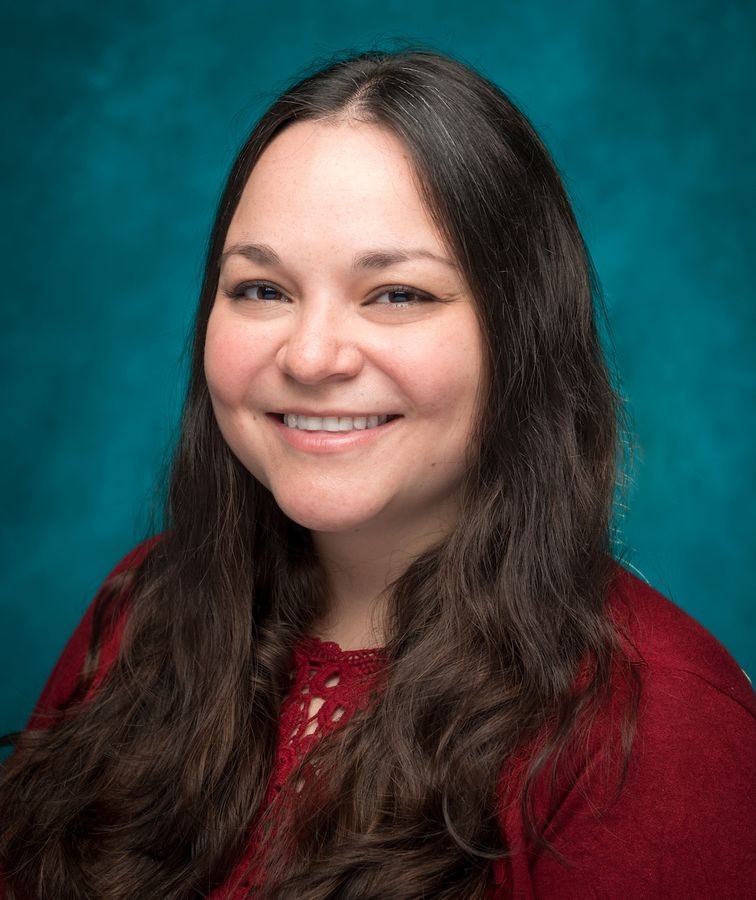
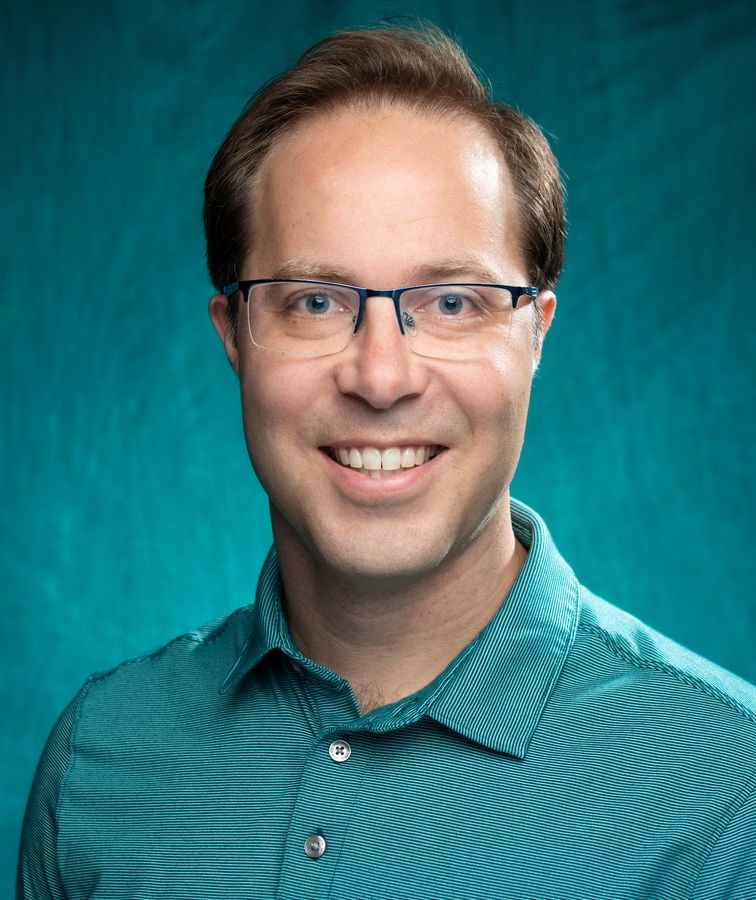
In the latest stage of their research on language acquisition, Danielle Daidone, associate professor of Spanish, and Ryan Lidster, assistant professor of Japanese, are using a grant from the Polish government’s Excellence Initiative University Research Program to collaborate with other researchers on studies of Polish and Ukrainian.
Last year, Daidone and Lidster won a first-prize award for their early career presentation on learning sounds of a second language at the International Congress of Linguists in Poznań, Poland. There, they met with Adam Mickiewicz University professors Anna Balas, Ewelina Wojtkawiak, Kamil Kaźmierski and PhD student Irina Kravchuk, and formed plans to apply for a grant through the Polish government’s Ministry of Science and Higher Education.
The two UNCW faculty had already studied how learners perceive new sounds in a second language in a variety of contexts, such as how English learners of Arabic and Japanese hear new and sometimes challenging sounds. To make informed decisions about curriculum design, teachers need to know where difficulties are most likely to arise.
“What would people struggle with in perception, and what can we very easily hear the difference between?” Lidster posed as the core question in their research. “We can predict performance pretty well in these rather exotic situations, but what about in more fine-grained situations like what Polish sounds like to Ukrainians?”
Balas, head of the Adam Mickiewicz University team, said that while the two languages share some similarities from their Slavic roots, it can pose a greater challenge in parsing similar, yet distinct sounds. It’s been especially evident as Poland has welcomed Ukrainian refugees over the past few years.
“This is a fascinating and new situation for us, to have such a large group of foreigners in the country, and also in the educational system,” she said. “We’re just interested in how they perceive our language.
“Not only do you have a foreign accent when you speak; you also have a foreign accent when you listen.”
Ukrainian phonology isn’t described well in existing research, Daidone added, and the team has stumbled upon new avenues to expand their research along the way. Over the fall, they presented preliminary findings at a conference in Poland and did some in-person work when the Polish researchers visited Wilmington, but they have more data gathering and analysis ahead of them before presenting findings in a published paper.
The European cohort continues to gather data to investigate what drives pronunciation differences among Ukrainian speakers and how sound perception differs between Ukrainian speakers in Poland and “naïve” speakers in Ukraine.
Lidster said this work will further test his and Daidone’s alternative statistical technique and theoretical model for second language speech perception.
“The dominant paradigm right now is one that can only handle a very narrow subset of language problems, and even in those cases, we've shown that our alternative model performs as well if not better than the current ‘industry standard,’” he said.