


Man Behind the Metrics: Mouhcine Guettabi
Q & A with the UNCW Professor and Regional Economist
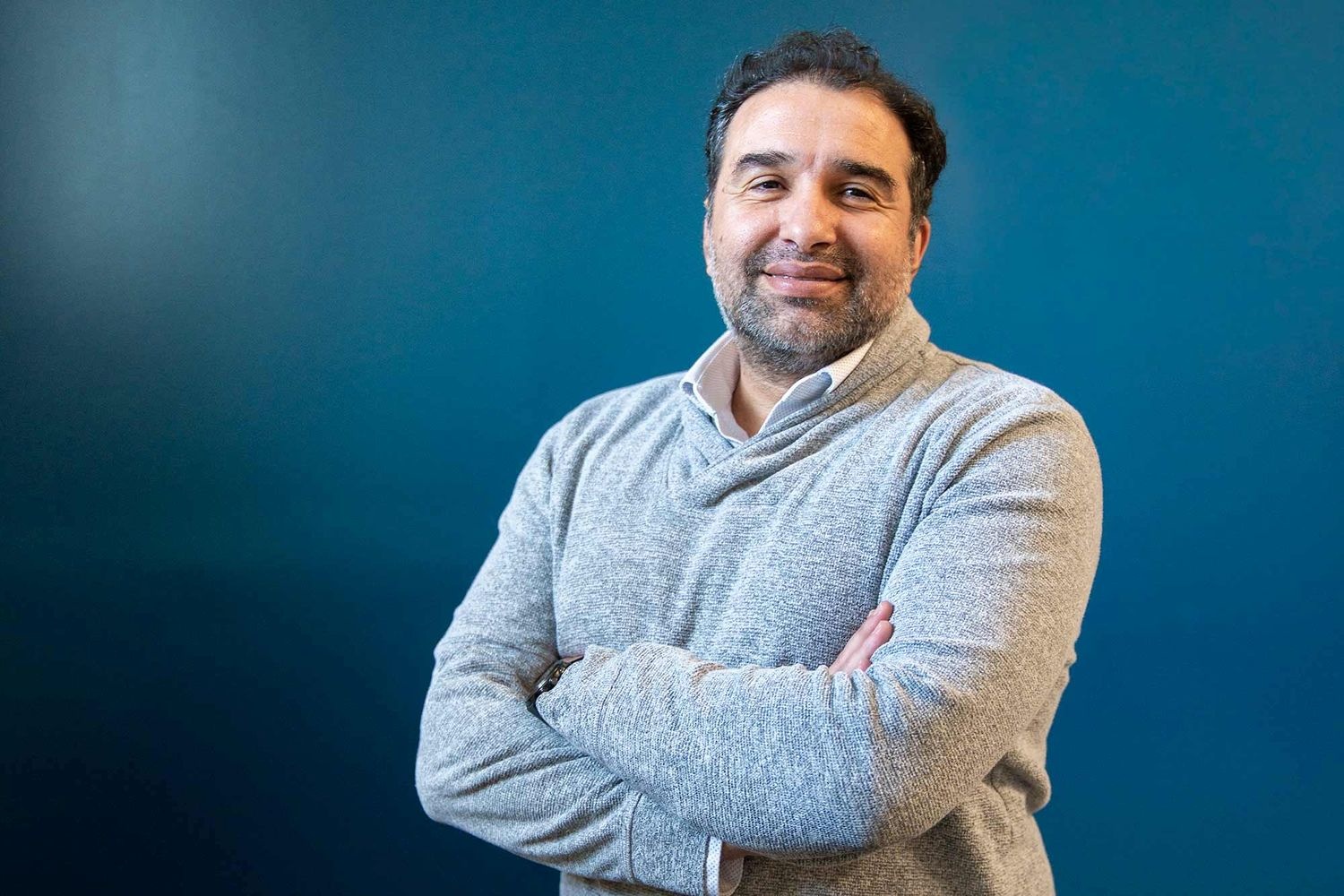
Photo: Jeff Janowski/UNCW
As the university’s regional economist, Mouhcine Guettabi is a resource for businesses, policy makers and the community. He monitors the area’s economic indicators, produces economic impact analyses and forecasts, and presents his findings to private and public organizations. Before joining UNCW in 2020, he taught at the University of Alaska Anchorage. His research has been published in leading economic journals. He earned a doctoral degree in economics with an emphasis on urban and regional economics from Oklahoma State University in 2012.
Q. Where does your interest in economics stem from?
A. I really like puzzles and answering complex problems. The puzzle that hooked me on economics was simple: why do some areas grow while their neighbors stagnate? Same state, same policies, sometimes just across a county line, but wildly different outcomes. I wanted to know what drives that divergence. Is it companies choosing where to locate? Workers choosing where to live? Infrastructure? Luck? Economics gives me the toolkit to pull those mechanisms apart. Regional economics specifically lets me study the decisions by people and companies that shape where prosperity lands.
Q. Can you break down the gist of economics in layman’s terms?
A. Economics is the study of how people respond to incentives. Change the incentives in terms of taxes, prices, penalties or rewards and you change behavior in predictable ways. So, the gist is: people respond to incentives, and we can forecast how.
Q. Tell us about the first time you stepped on UNCW’s campus.
A. I visited in February 2020, a month before COVID shut the world down, and was really impressed by the energy. There were students everywhere, conversations spilling out of buildings, and I liked how well the campus flowed from one end to the other. I left thinking, “I could see myself here,” which turned out to be the right instinct.
Q. What was it like living and working in Alaska?
A. It was truly magical. I was fortunate to do research on Universal Basic Income for almost a decade, worked on influential policy questions and collaborated with researchers from a number of disciplines. I was able to spend considerable time hiking, biking and skiing. Best of all, I met my wife while living there.