


A Network of Partners. A World of Opportunity.
CSB’s consultancy program pairs students with organizations across continents — building connections that shape careers.
Courtesy: Leah Takata Photography
At the Cameron School of Business, consultancy often moves beyond the classroom, taking students into boardrooms of nonprofits, public agencies and global companies. Undergraduate and graduate teams step into the role of problem solvers, providing fresh insights to help firms address challenges.
They dig into market research that uncovers new audiences, builds financial analyses, streamlines operations and maps out long‑term strategies that help partners grow. Their recommendations often become actionable plans that organizations implement.
“The consultancy program is truly empowering for students,” said Lisa Scribner, associate dean for graduate, international and executive programs. “When they have to integrate their knowledge and skills, they see for themselves that they’re capable and that they can do this.”
Real Impact for Community Partners
CSB has required consulting projects since 1975, beginning with its Professional MBA program, an on‑campus, hybrid offering that was phased out in 2022 as the Executive MBA and online MBA programs expanded, said Rebecca Guidice, director of the Executive MBA Program and management professor. Today, EMBA students complete in‑person residencies culminating in intensive, weeklong consulting projects. Each cohort partners with an organization under the guidance of faculty members, delivering recommendations with tangible impact.
Recent EMBA teams have partnered with organizations such as the Cameron Art Museum (CAM) and the Cape Fear Public Utility Authority (CFPUA), helping leaders address issues they may not have the staff capacity, specialized expertise or funding to tackle alone. Students from the University of Surrey’s Business School in the United Kingdom joined Cameron students on the CFPUA project, adding an international dimension to the team’s analysis.
“The EMBAs’ professional backgrounds provide both breadth and depth of practical knowledge and credibility that enable them to contribute meaningful, data-driven strategies and implementable solutions to the regional and local organizations of different sizes and types,” said Guidice.
“When visiting MBA students from partner programs in the UK and India join our consulting teams in Wilmington, they contribute a unique global perspective that enriches the analysis and broadens the strategic options available to local partners. These visiting MBAs also gain firsthand exposure to the economic and social landscape of southeastern North Carolina, amplifying the region’s visibility and creating informal ambassadors for Wilmington,” said Guidice.
At CAM, students analyzed marketing opportunities and strategies to strengthen CAM Café, one of the museum’s earned‑income streams. They also worked with a regional economist to estimate the museum’s $6.9 million annual economic impact on southeastern North Carolina.
“It’s something they didn’t know before, and it changed the way they could tell their story,” said Drew Rosen, Duke Energy-Gordon C. Hurlbert Distinguished Professor in Information Systems, who led the CAM project with Aaron Wilcox, an art and art history professor.
The findings helped CAM articulate its role “as an important economic driver in our region,” said Executive Director Heather Wilson. “The EMBA students gave enlightening insights into marketing and how to capitalize on CAM Café. Their recommendations on social media, the website, programs and signage were helpful, as well as their ideas for leveraging the café to gain new museum lovers and members.”
EMBA students are professionals with at least five years of experience. Because EMBA cohorts draw professionals from diverse fields, the residency at CAM included a local surgeon and CFPUA’s executive director, Kenneth Waldroup ’25M. Impressed by the experience, Waldroup later invited the EMBA program to conduct a consulting engagement for his own organization.
“It was clear from my personal experience that a consultancy would bring exceptional talent to the table to help CFPUA seek organizational improvement,” Waldroup said.
The students’ analysis challenged assumptions within CFPUA’s leadership, revealing that better use of existing staff — along with modest internal staffing increases — would be more effective for certain workgroups than relying heavily on contract services, he said.
“This reinforces the wisdom of having an outside perspective to evaluate data and work processes,” Waldroup added.
From a student perspective, the residency was elevated by the wide range of talent among classmates, said Waldroup. Younger graduate students contributed strong technical and IT skills, while seasoned professionals brought decades of experience from business, nonprofits, public service and other fields.
“It made the experience more than an academic exercise; it was a true consultancy that brought value to the client,” he said. “Having paid the private sector for such consultancies in the past, I have a real-life reference point for understanding that value, and it is impressive.”
Consultancy Expands to India
Cameron’s consultancy partnerships continue to grow globally, expanding the school’s ability to bring international insights back to the region. Earlier this year, six Executive MBA students worked alongside MBA students from the Gandhi Institute of Technology and Management (GITAM) in India on a consulting project for Goodyear, one of the world’s largest tire manufacturers. The Global Immersion in India was led by Scribner and Manoj Vanajakumari, associate professor in the Congdon School of Supply Chain, Business Analytics and Information Systems.
EMBA student Randy Young conducted market analysis, identifying Goodyear’s key competitors, market share and strategies to strengthen its position.
“Goodyear provided senior-level resources to listen to our presentations on how they could get better,” he said. “Our analysis was questioned, and they were looking for tangible recommendations that combined several different class concepts. Collaboration was key and confidence was required.”
During the trip, students visited technology hubs, medical innovation centers and facilities used to measure machine noise levels. They also joined a traditional dance session at GITAM, gaining a deeper understanding of local culture.
“The cultural experience allowed me to clearly see supply chain management at its foundational level and experience innovation,” Young said.
Executive MBA teams walk away with many takeaways, but one of the most transformative is the ability to collaborate across borders, said Guidice. They learn to navigate cultural nuances, build trust across time zones and deliver results as a team.
“This skill-based outcome is valuable, as it is widely recognized that professionals will work with a variety of international stakeholders, including alliance partners, customers, suppliers and colleagues in corporate subsidiaries abroad,” Guidice added.
Undergraduate Consulting, Local and Abroad
For more than 15 years, the undergraduate consultancy program has provided support to a wide range of global brands, including Moser crystal and Budweiser‑Budvar, said Ethan Watson, chair of the Department of Economics and Finance. Undergraduate teams have also partnered with start‑up ventures such as a circular, sustainability‑focused waste company and a fitness app. The program’s global study abroad partner, GIOBA, identifies firms and presents CSB with options to consider.
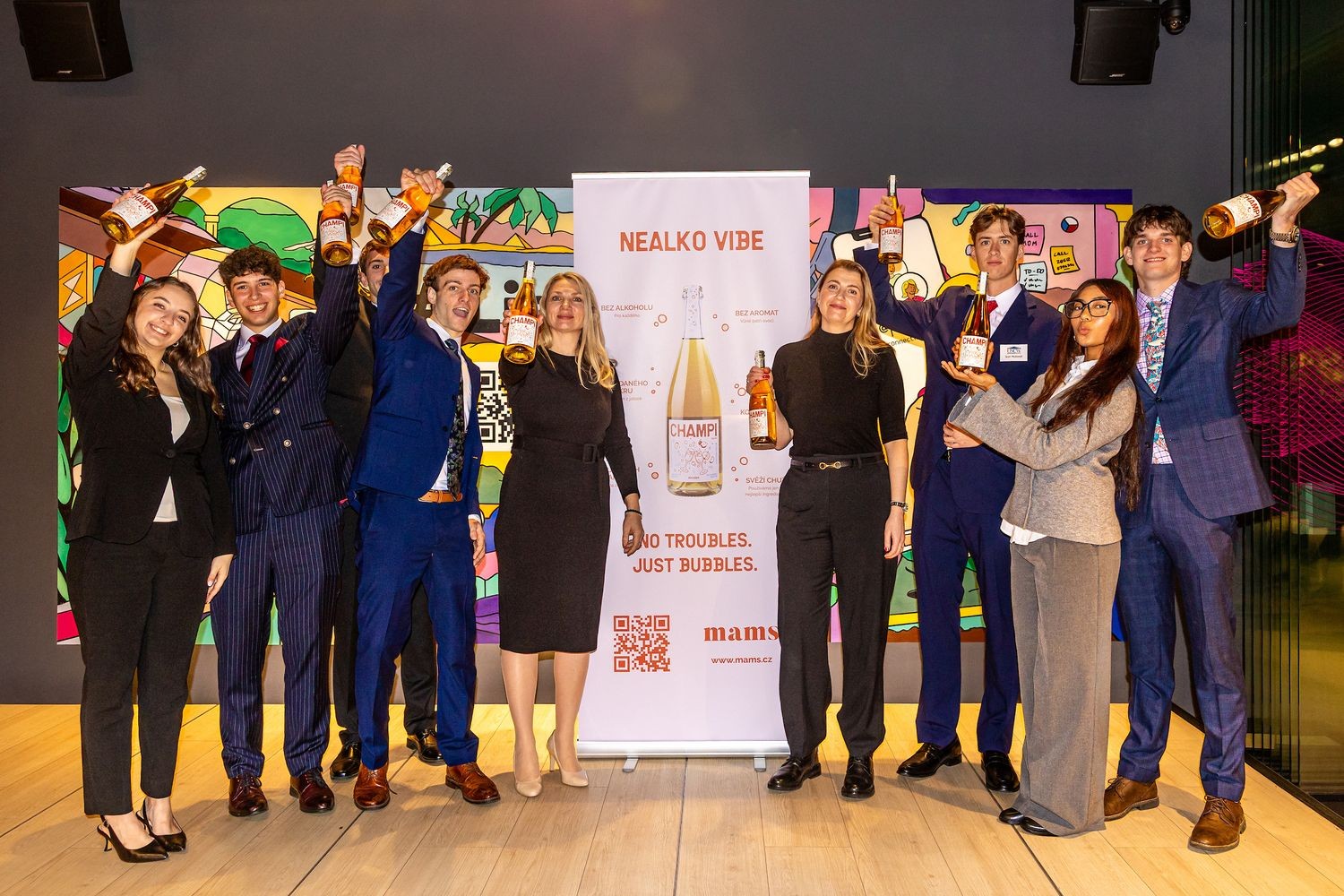
Undergraduates participate in international consulting through a Prague‑based course each spring. Students work with a client throughout the semester, then travel to Prague during spring break to present their recommendations in person. This year’s client, MAMS, is a start‑up producing an alcohol‑free champagne alternative called Champi.
“They wanted help thinking through how to enter the UK market and then develop a global rollout strategy,” Watson said. “The students conducted an external analysis, identified target market segments, developed strategies for reaching those segments and provided supporting financial projections and brand recommendations.”
These experiences push students to think strategically, collaborate across teams and deliver professional‑level recommendations.
“Not many college students get to say, 'I consulted for a company in an international context.' Hopefully our students’ recommendations help a company abroad, but through the process our students develop skills that will benefit their future employers here at home. It is a win‑win for businesses abroad and locally because this is applied learning at its finest.” -Ethan Watson
Business administration major Justin Hinckley ’26 worked with other student project leaders to structure the workflow. He also had to piece together the full scope of the project by understanding what each student team was doing. Even as the group developed strategies to manage these issues, coordinating the work and keeping track of individual contributions remained ongoing challenges, he said.
“It was fulfilling to see the end result of the project and knowing it had real-world value,” Hinckley said. “As consultants, it’s not up to us to make the final decisions for our clients, but knowing we gave good information and strategic recommendations was a more interesting end to this project than a simple letter grade.”
Locally, undergraduate students provide consulting services to firms and organizations through courses and a student consulting club, helping them build professional confidence early in their academic careers.
“Textbooks are great. Application is better,” said Rosen. “These projects bring it all together.”
More Partners, More Opportunities
As enrollment in the Executive MBA continues to grow, so does the scope of the consultancy program. Faculty are exploring additional international partnerships, new countries and expanded industry sectors. At the same time, community collaborations remain central to the program’s mission, Scribner said.
“We’ll continue to build what’s working,” she said. “More partnerships, new opportunities and the same focus on applied learning.”