

UNCW Partnership Brings Safe Fish to Families in Need
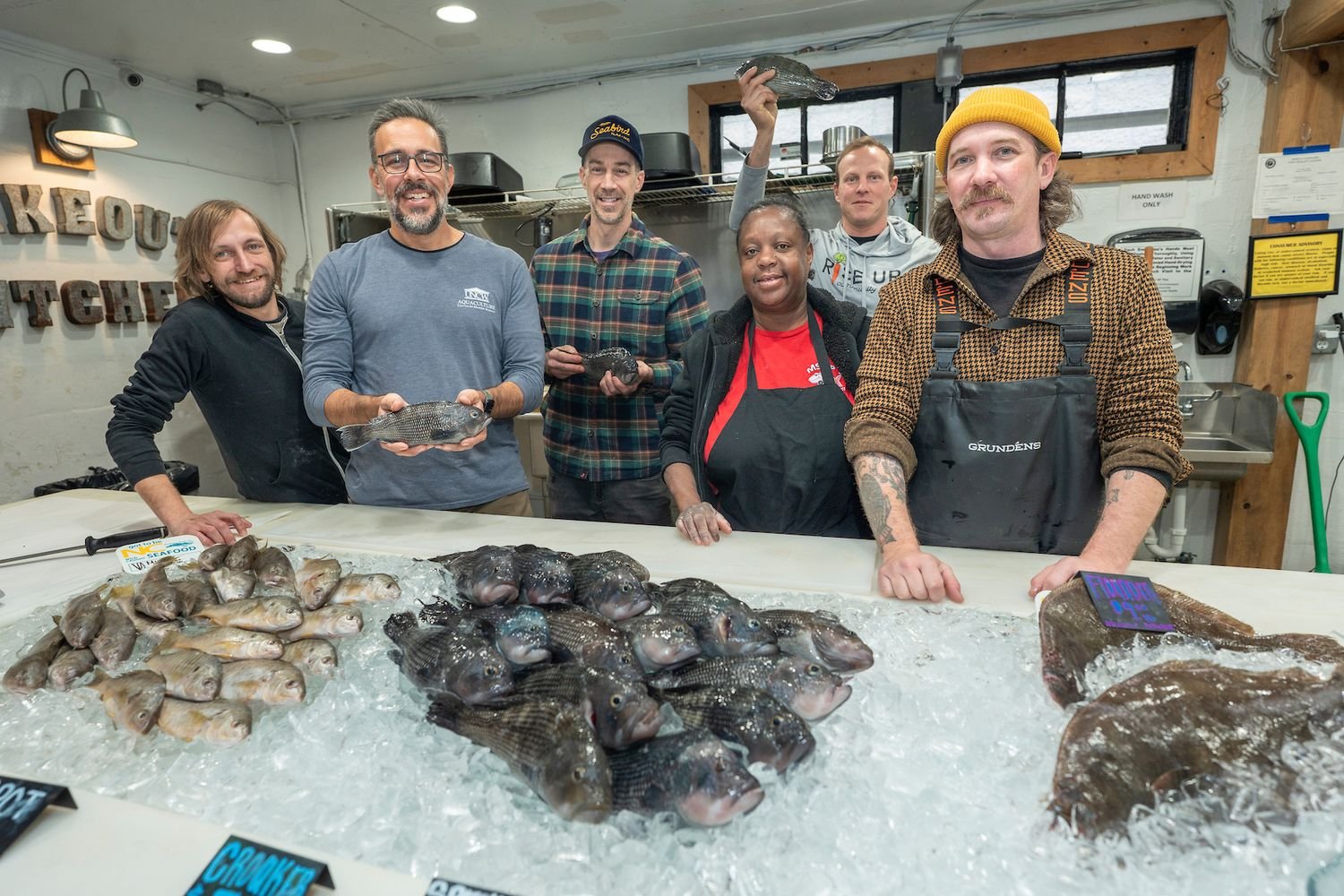
${photoCredType}: Jeff Janowski/UNCW
Several years ago, Chef Dean Neff participated in a project studying the risks faced by residents who rely on fishing for food in contaminated stretches of the Cape Fear River. The experience revealed a gap in access to safe, healthy fish.
Later, when he learned that UNCW’s Aquaculture Facility sometimes produced small‑grade fish that are more difficult to market, something clicked. Neff, who has been named a semifinalist for the 2026 James Beard Foundation's Outstanding Chef Award, approached the UNCW Center for Marine Science’s aquaculture team with an idea: create a fish bank at Zora’s Seafood Market to put those fish to good use.
“Fish is rarely handled by food banks or large relief organizations due to storage and safety concerns,” said Neff, owner of Zora’s Seafood Market and Seabird restaurant in downtown Wilmington. “A collaboration with UNCW fills that gap with responsibly raised seafood that is both safe and sustainable.”
Patrick Carroll, research specialist and aquaculture facility supervisor, at CMS, said small-grade fish often go unsold. Providing Zora’s with the fish frees valuable tank space for the next cohort of fish.
“Outreach projects like this highlight the finfish aquaculture research we are conducting at CMS,” Carroll said. “It gives the public an idea of what we are doing and how we may be able to help. To have partners like Seabird and Zora’s is a great way to show how the university can work with local businesses to benefit the community.”
Each week, UNCW raised small-grade black sea bass are taken to Zora’s Seafood Market, where families can pick them up after the market prepares the fish.
“In this endeavor, our aquaculture program highlights the benefits of fresh, nutritious and sustainable finfish, specifically sea bass to community members in an affordable way,” said Kenneth Halanych, CMS executive director.
The program, launched in early January, is expected to run as long as the small-grade fish population holds out.
“With external help, we may be able to go longer,” Carroll added.
Carroll and Neff hope the initiative raises awareness about food insecurity and the importance of local, sustainably produced seafood.
“Fresh, local seafood should be available to everyone,” Carroll said. “Seafood can be expensive, and cost shouldn’t be a barrier to nutrition.”
Neff also sees the collaboration as an example of what community partners and the university can accomplish to meet needs.
“It’s amazing how something that seems small on UNCW’s end can have such a big impact locally,” he said.