


UNCW Cyber Conference Highlights Emerging Threats
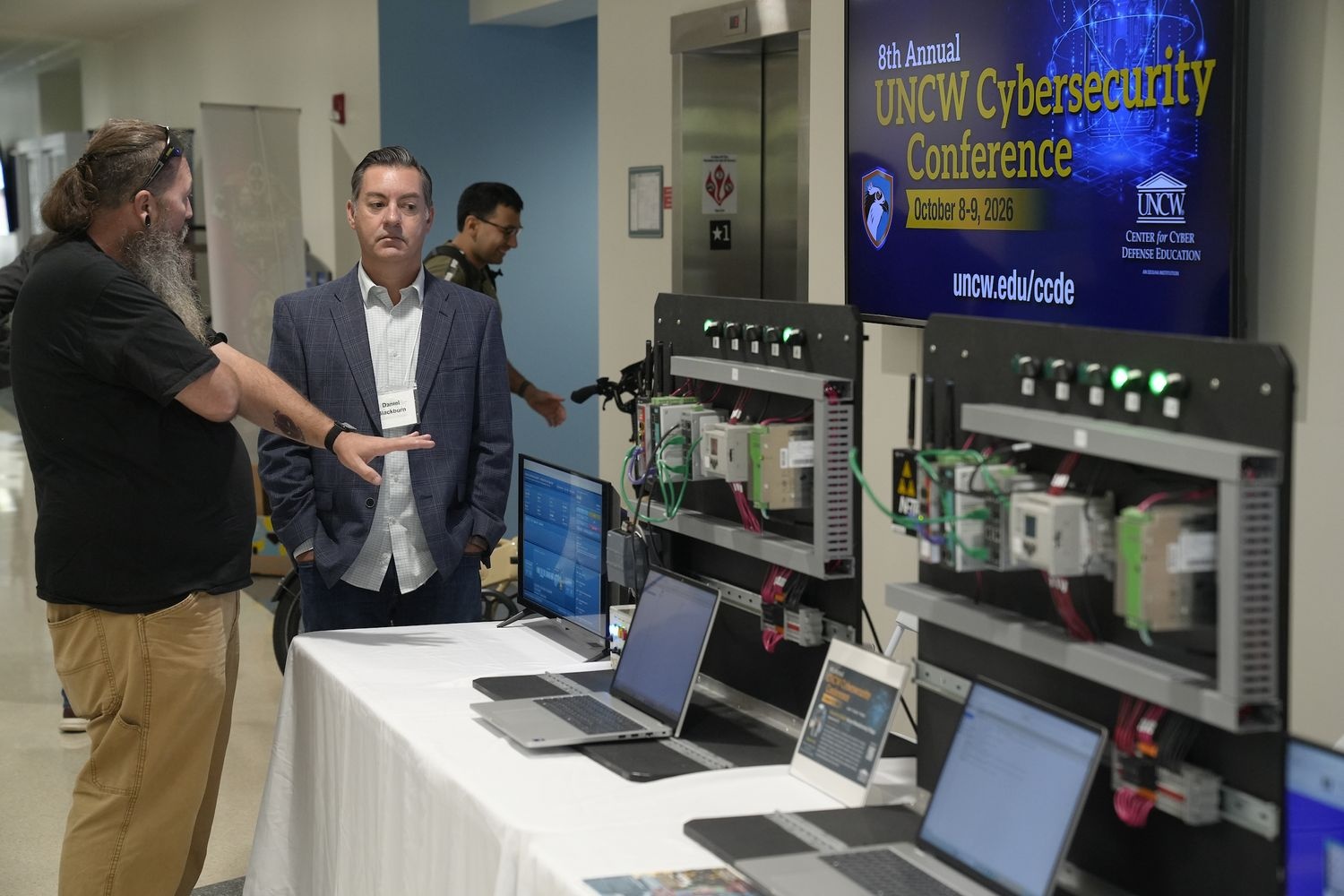
Courtesy: Ibrahim Capar/UNCW
The eighth annual UNCW Cybersecurity Conference brought together experts from government, industry and academia Oct. 8-9 to explore emerging cyber threats, maritime cybersecurity and the future of digital defense.
The two-day event featured presentations, panel discussions, technical workshops and hands-on cybersecurity competitions. U.S. Senator Thom Tillis and Congressman David Rouzer welcomed attendees, underscoring the growing national importance of maritime cybersecurity and the protection of critical infrastructure.
The conference featured two tracks focused on emerging cybersecurity trends and maritime cybersecurity. Participants explored issues including artificial intelligence, cloud security, Zero Trust Architecture and evolving cyber threats.
The maritime cybersecurity track brought together domestic and international experts, including representatives from the U.S. Coast Guard, Lloyd's Register, CYTUR, NHL Stenden University of Applied Sciences, Booz Allen and the International Society of Automation. Sessions explored maritime cybersecurity regulations, threat-informed secure-by-design approaches, cyber resilience and the growing risks associated with interconnected information technology (IT) and operational technology (OT) systems.
Speakers from organizations including CISA, IBM, Cisco, Pendo, Candescent, Old Dominion Freight Line and NC State University also shared perspectives on emerging threats, artificial intelligence, security operations and workforce development.
Conference participants had opportunities to develop practical skills through capture-the-flag cybersecurity competitions, interactive demonstrations and workshops addressing incident response, industrial wireless security and cyber-physical systems. A maritime-focused tabletop exercise led by the North Carolina Army National Guard Cybersecurity Response Force explored the coordination required to respond to a cyber incident affecting vessel operations.
"As information technology and operational technology become increasingly interconnected, cybersecurity threats can have consequences far beyond data loss, affecting physical operations, safety and the continuity of critical infrastructure," said Ulku Clark, professor of cybersecurity and information systems and director of UNCW's Center for Cyber Defense Education. "There is a growing need for professionals who understand both environments, yet this combination of expertise remains difficult to find. By bringing together experts from government, industry and academia, including international maritime cybersecurity leaders, we are helping bridge that gap through collaboration, applied research and workforce development."
The conference highlighted UNCW's commitment to cybersecurity education, applied research and talent pipeline development through interdisciplinary collaboration between the Cameron School of Business and the College of Science and Engineering.
Through its Center for Cyber Defense Education and Maritime Cybersecurity Applied Research, Technology and Education Center (MCARTEC), UNCW continues to build partnerships that connect academic expertise with the cybersecurity challenges facing businesses, government organizations and critical infrastructure sectors. UNCW’s designation as a National Center of Academic Excellence in Cyber Defense Education (CAE-CD), awarded by the National Security Agency and the Department of Homeland Security, reflects the strength of the university’s cybersecurity programs and its dedication to preparing future cyber defense leaders.