


Seahawks in Peril: Gessner Revisits Osprey in Audubon Feature
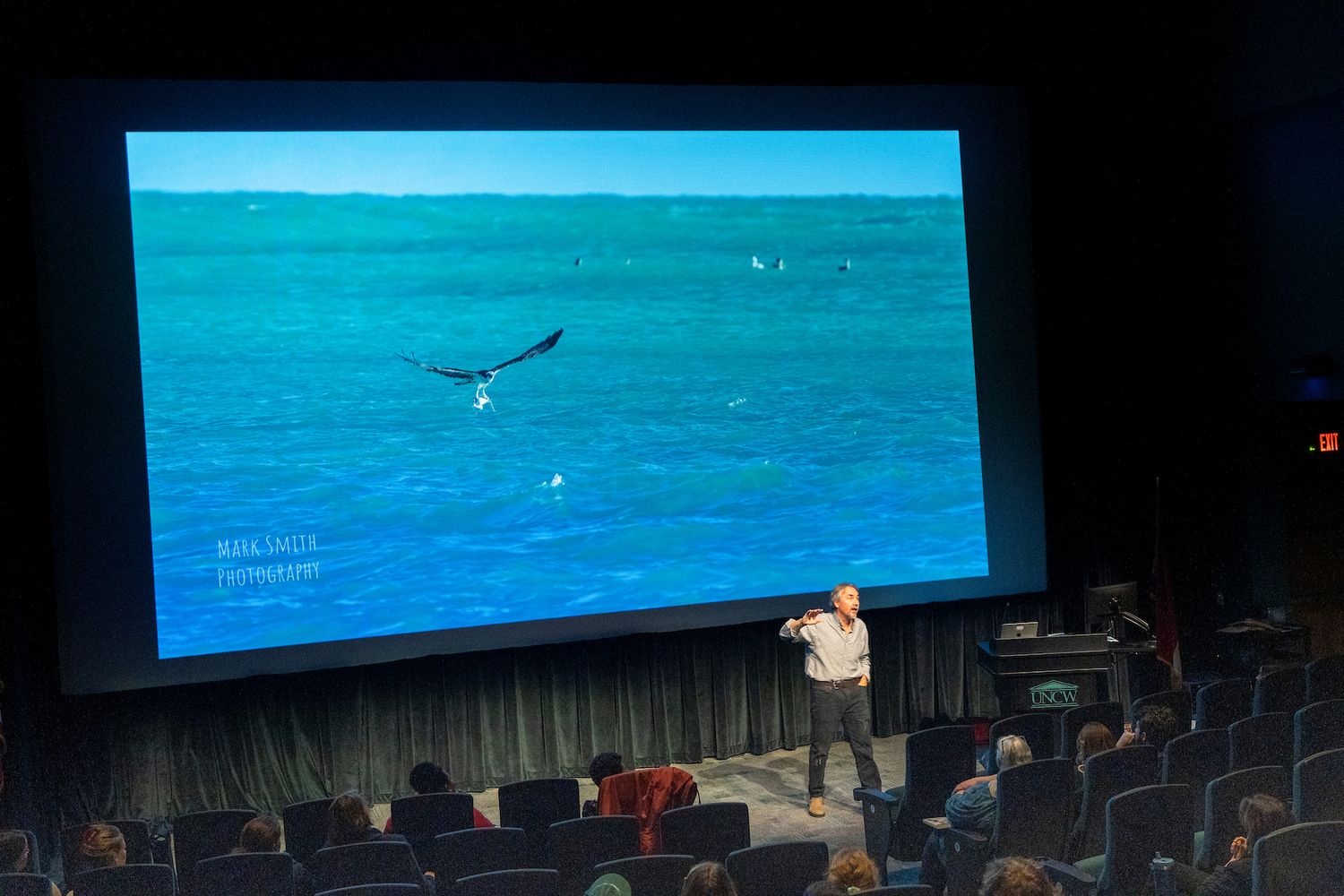
Photo: Maggie Beck/UNCW
In the ‘90s, David Gessner spent six months studying ospreys at Cape Cod, observing them build their nests and marveling at their swift, dramatic plunges into the water to catch their prey.
The population there was bouncing back after the insecticide DDT, which critically weakened their eggshells, was banned in 1972. Woven in with his own personal story, he chronicled his observations in the 2001 book “Return of the Osprey: A Season of Flight and Wonder,” which was just re-released in a 25th anniversary edition by Cornell.
But a new plight for the beloved birds drew him out again last fall, this time focusing on the Chesapeake Bay in Virginia, where biologists and observers have noted sharply declining populations as more and more osprey chicks starve.
Gessner, Kenan Distinguished Professor of Creative Writing, traveled up the bay and beyond to explore the extent of the issue, where he learned that industrial fishing of menhaden, a key food source for the ospreys, was leading to their starvation. He published his account in this summer’s edition of Audubon, diving deep into the science and consulting experts to paint a full picture of the environmental challenges at play, including climate change.
“Environmental problems are so overwhelming that I sometimes don't know where to start," he said. "This particular fight allows me to focus on an animal I care a lot about that’s also connected to the whole food chain."
Gessner’s journey on the Audubon piece laid the foundation for what could be his third book about the osprey. This time around, the situation is more complicated, but he said the human interest in protecting wildlife that depend on the menhaden seems stronger and more cohesive.
“With DDT it was kind of an open-and-shut case,” he said. “This time, it might not be as clear a case of connecting the dots, but it’s a crisis for sure. The question’s going to be, how do people respond?"
Although Virginia’s laws mean the birds’ struggle is particularly stark in the Chesapeake Bay, Gessner observed the ripple effect and other complicating factors impact nests further up the coast.
Having spent so much time with ospreys, he believes they’re a bird that can rebound. And as a species that’s beloved by many, their story could be a warning cry that helps rally people to address the threats against them.
“They’re just such beautiful, athletic, daring, gregarious birds that they’re really hard not to like,” he said. “They’re not shy around us and when they’re near, you know it.”